November 9, 2026
7 Ways to Say We Want to Hear from You: CTA Examples
You closed a deal on Tuesday and sent the usual follow-up on Wednesday: a generic survey link plus a line that you want their thoughts. By Friday you've got two clicks, and one person only opened it for the incentive. The list isn't cold. The ask is.
Timing, the question, and the wording do more work than a prettier template. A soft "we want to hear from you" with no job attached gets skipped. A specific question, sent while the experience is still fresh, gives you language for the next email, feature, or offer.
Below are seven ways to ask. Each one names the moment, a subject line or on-screen label, and wording you can paste. For a wider look at how clients share website feedback, skim that, then rewrite one channel this week instead of launching all seven.
Table of Contents
- 1. In-Product and On-Site Feedback Widgets
- 2. Structured Satisfaction Surveys (NPS, CSAT, and CES)
- 3. One-on-One Customer Interviews
- 4. Community Forums and Public Feature Request Boards
- 5. Social Listening and Review Monitoring
- 6. Beta Programs and Customer Advisory Councils
- 7. Email Feedback and Closed-Loop Feedback Programs
- How the seven feedback methods compare
- Turning Every Reply into a Next Step
1. In-Product and On-Site Feedback Widgets
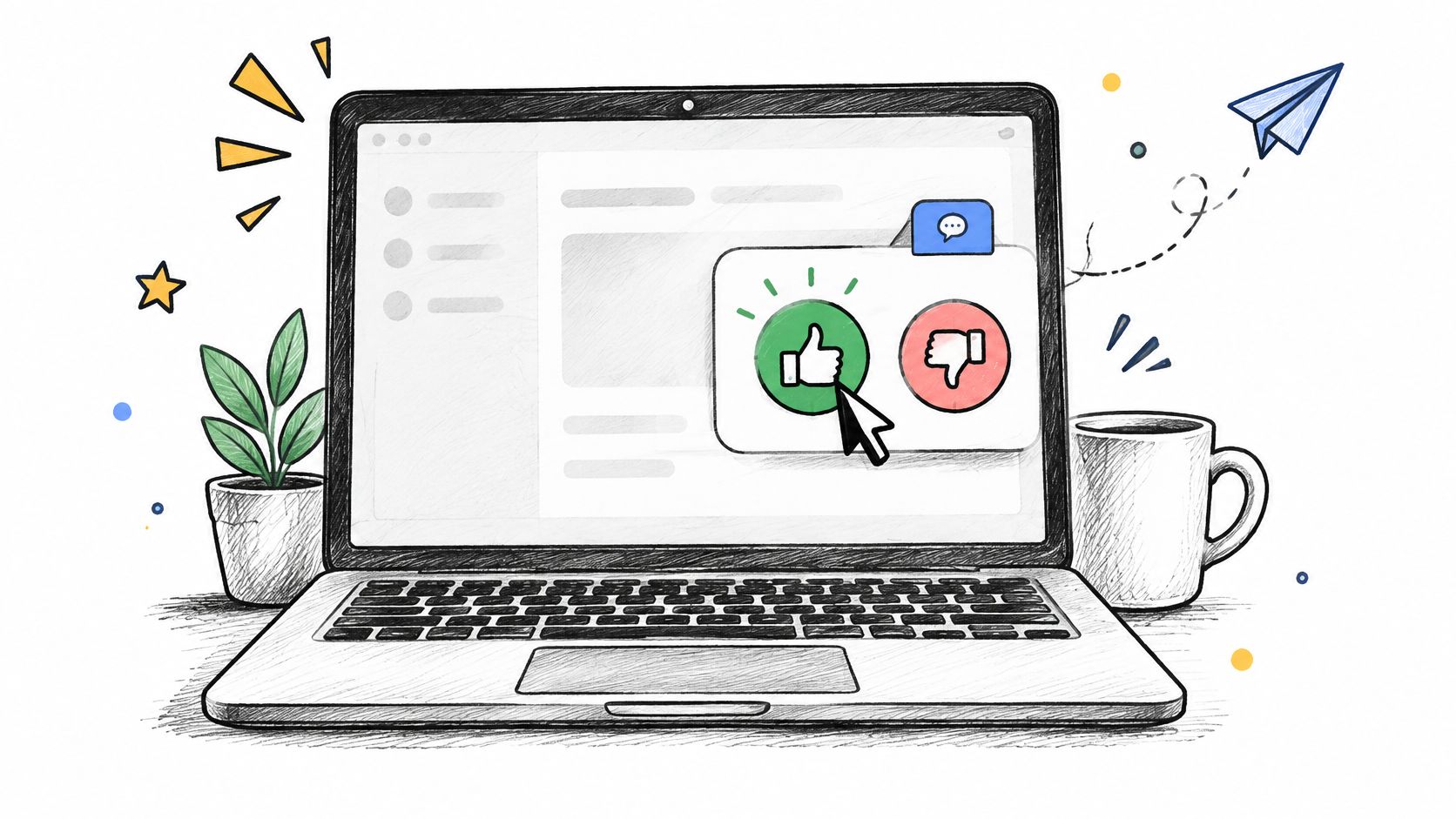
A user just finished onboarding. Ask on that success screen, not in the middle of a form and not in a random pop-up three days later.
Label the prompt "Quick check on setup." The CTA is "Was this step clear?" with thumbs up and thumbs down, plus one optional line: "What slowed you down?" Hotjar and Qualaroo both ship on-page polls that SaaS and ecommerce teams drop onto a single URL. A feedback button after a feature launch answers a narrower question: do people understand the new workflow?
Pew Research Center reports that open-ended questions have a median item-nonresponse rate of about 18%, and prompts that want several sentences land near 18% nonresponse versus about 13% for a word or short phrase. One tap plus an optional phrase beats a blank essay box.
Keep the prompt out of the task
Cap it at one prompt per session or per week. Fire it after a win, like a completed import. Tag replies weekly: confusion, bug, praise, idea.
The widget fails when it covers the button they need or asks three things at once. A curious click isn't the same as a note you can route.
This short walkthrough shows the same pattern on a product screen.
2. Structured Satisfaction Surveys (NPS, CSAT, and CES)
Support just closed a ticket. Send the score in the next hour, not inside a quarterly novel nobody finishes.
Subject: "One score on today's fix." CTA: "How satisfied were you with this reply? Reply 1 to 5." Follow with "What drove that score?" That's CSAT, tied to one interaction. CES belongs on the same clock: "How easy was it to get this done?" NPS, the 0-to-10 "would you recommend us" question Fred Reichheld introduced in Harvard Business Review in 2003, belongs quarterly or twice a year, because you're measuring the relationship, not the ticket. Choosing when to use NPS versus CSAT is mostly that split.
Typeform's survey guidance puts completion near 83% for surveys with one to three questions, while email surveys often land around 15–25% and in-app surveys around 27.52%. SMS can run near 40–50%, and only when the relationship is already warm.
Practical rule: Segment scores by customer type before you celebrate an average.
Detractors need a human note inside a set window, such as 48 hours. A blended number with no open text is a vanity chart. Say a consulting firm sends NPS to every logo in March and CSAT ten minutes after each workshop. The workshop score tells you which facilitator to coach. The NPS trend tells you whether the retainer still feels worth it.
3. One-on-One Customer Interviews
Don't ask whether they'd use a feature. Ask about the last time the problem showed up.
Book 30 to 45 minutes. Subject: "20 minutes on the last deal that stalled." CTA: "We want to hear from you about what you tried before you picked a vendor. Reply with a time that works." Teresa Torres's continuous discovery habit is a weekly interview, not a yearly research project. Clayton Christensen's jobs-to-be-done work shows up here as a switch interview: what they hired the last solution to do, what they fired, and why.
Gartner reported that 74% of B2B buying groups showed unhealthy conflict in a survey of 632 buyers in August and September 2024, and groups that reach consensus are 2.5 times more likely to call the deal high quality. One champion isn't the buying group. Ask who else has to agree.
Ask for the last real episode, not a hypothetical feature vote.
Lost prospects talk more freely than happy customers. We're pay-per-close at Ever Outbound, and those "didn't buy" conversations are how we tighten an offer and a target list before the next sequence. You can see how that proof gets used on our social proof page. "Do you like our new dashboard?" only buys you a compliment.

4. Community Forums and Public Feature Request Boards
A public board looks democratic until five power users vote the roadmap into a corner.
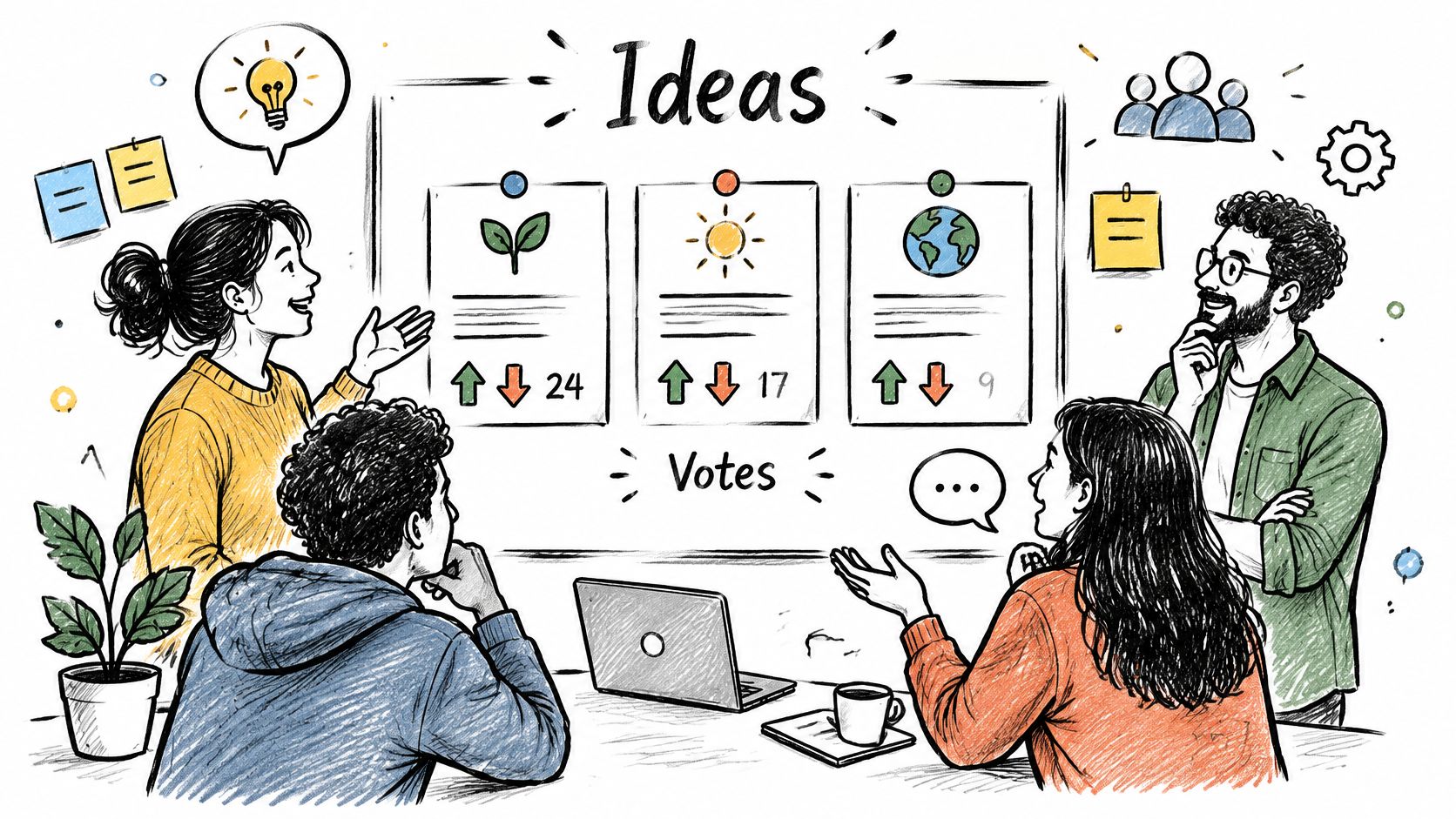
Canny and UserVoice let people post ideas and upvote them. Developer tools often use GitHub Discussions the same way. Send the invite after a release, when someone just hit a gap. Subject: "Vote on what we build next." CTA: "We want to hear from you. Add one request, or upvote one that already exists."
Status beats a suggestion box
Publish what moved, what you merged, and what you declined. Duplicate threads hide the main theme. Pair the vote count with two interviews before you treat a high score as a commitment. Credit active people with early access or a public thanks. A badge with no status update feels like a stamp on a closed door.
Say a four-person agency posts "client portal comments" and "white-label reporting." Reporting wins the votes. Interviews show the portal is what stalls renewals. Ship the quiet problem, and say so on the board. More on running feedback in public sits on the Ever Outbound blog.
5. Social Listening and Review Monitoring
A lot of the useful sentences never hit your form.
Yahoo Finance's coverage of Qualtrics findings notes that fewer than one-third of consumers contact a company directly after an experience. Many tell a friend, post, or stay quiet. That coverage also says 61% of companies rely mainly on surveys, while fewer than half add indirect sources. Gartner found in 2025 that 73% of B2B buyers actively avoided suppliers that sent irrelevant outreach. If you aren't reading the public words, your next email guesses.
Watch G2, Capterra, Reddit, and the niche Slack your buyers already use. Brandwatch or Sprout Social can catch the phrasing. Set alerts for your name, two competitors, and the problem phrase, such as "booked calls that no-show."
Subject if you answer a review: "Thanks for the note on onboarding." CTA: "We want to hear from you if the fix still misses. Reply on the review." Tag monthly by pricing, onboarding, and support. Invite a review only after a clean milestone, never after a messy ticket. Buyers already look at pages like our reviews before they bother with a survey.
A thin review count can mean low trust or bad timing, not low interest.
6. Beta Programs and Customer Advisory Councils
A closed beta is a promise with a calendar, not a secret chat that goes quiet.
Pick people across company size and use case, not only your biggest logo. Subject: "Early access, one note a month." CTA: "We want to hear from you before this ships. Join the beta and send one friction point after each session."
PwC's 2025 customer experience survey found that 86% of U.S. consumers said human interaction was moderately or very important to their brand experience. A council with nobody answering is just another form.
- Time box it: Name the weeks, the channel, and what decision their notes will touch.
- Show the change: Tell them what you altered, or why you didn't build the request.
- Rotate seats: Last year's panel shouldn't freeze this year's market.
- Skip the biggest-logo bias: A five-person firm will catch friction an enterprise admin never sees.
Agencies can run the same pattern as a client advisory group before a service change. If you can't name the decision, don't recruit them. The operating shape behind a tight group like that is on our about page.
7. Email Feedback and Closed-Loop Feedback Programs
Plain-text email still works when the question is one line and a person is on the From line.
After signup, send from a name, not a no-reply box. Subject: "What almost stopped you?" CTA: "We want to hear from you. Reply with the one thing that nearly killed the signup." A newsletter can shrink that to "Next issue: pipeline, pricing, or proof?"
The FTC's CAN-SPAM compliance guide states the law took effect on January 1, 2004, covers business-to-business email, and requires a working opt-out honored within 10 business days. That mechanism has to stay functional for at least 30 days after you send. A friendly closer with a dead unsubscribe is a compliance problem.
Google's email sender guidelines say keep user-reported spam below 0.3%, and they recommend staying under 0.1%. Cross 0.3% and delivery gets worse.
Close the loop or stop asking
Tag each reply: interested, timing, wrong person, objection, referral, unsubscribe. Customer Experience Dive notes that only 16% of customers strongly believe their feedback leads to meaningful action, while follow-up within 48 hours can double future survey responses.
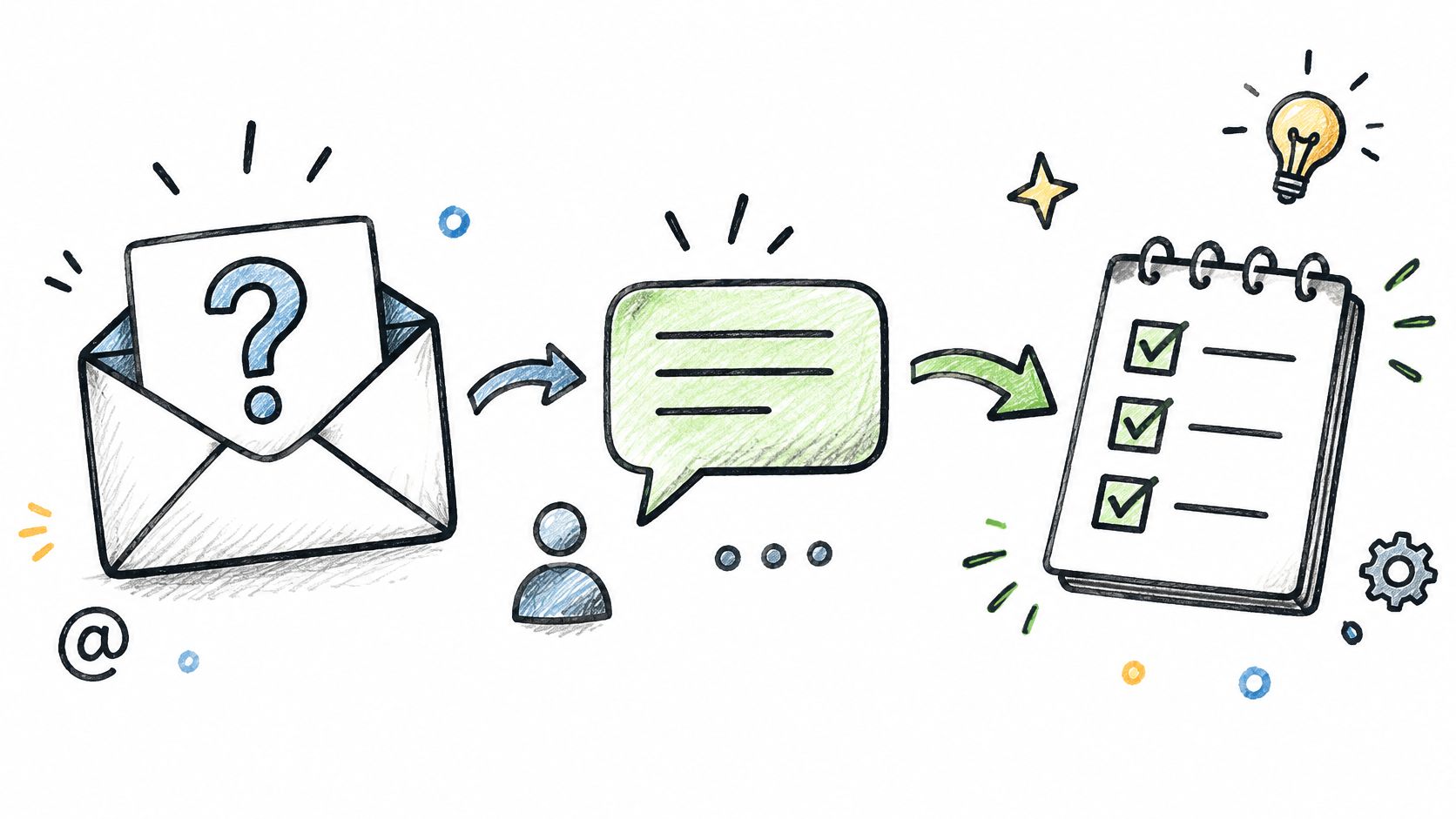
Publish a short "you said, we did" note, and say so when you won't build it. We're pay-per-close at Ever Outbound, and we study which replies become booked calls before the next draft. The help center covers that handoff, and you can close the loop on support complaints with the same owner-and-update habit.
How the seven feedback methods compare
| Item | Best For | Typical Format | Main Drawback |
|---|---|---|---|
| In-Product and On-Site Feedback Widgets | Gathering contextual feedback during product use | Triggered prompts, ratings, or short text boxes | Can interrupt users and overrepresent strong opinions |
| Structured Satisfaction Surveys (NPS, CSAT, and CES) | Tracking customer sentiment over time | Standardized rating scales with optional follow-up questions | Scores can hide nuance or be unreliable with few responses |
| One-on-One Customer Interviews | Understanding customer motivations and decisions | Scheduled, semi-structured conversations | Time-intensive and vulnerable to interviewer bias |
| Community Forums and Public Feature Request Boards | Collecting ideas and enabling peer support | Public discussions, idea submissions, and votes | Vocal minorities may dominate; moderation is required |
| Social Listening and Review Monitoring | Discovering unsolicited opinions and market trends | Monitoring public reviews, social posts, and forums | Feedback can be skewed, and automated analysis may miss context |
| Beta Programs and Customer Advisory Councils | Testing ideas with engaged customers before launch | Early-access testing and recurring advisory meetings | Participants may not represent the broader market |
| Email Feedback and Closed-Loop Feedback Programs | Collecting feedback and showing customers how it is acted on | Reply-based emails, short polls, and feedback routing | Requires consistent tracking and cross-team coordination |
Turning Every Reply into a Next Step
Match the CTA to the moment. A thumbs vote belongs on the success screen. A score belongs right after the ticket. An interview belongs with someone who just lived the problem, including the prospect who said no. A public board belongs after a release. A review reply belongs where buyers already complain. A beta note belongs with people who agreed to a time box. A one-line email belongs with a named sender.
Keep every question specific enough that a tired person can answer in one breath. "We want to hear from you" only works when the next words name the job: clarity, effort, the last stalled deal, the feature they'd vote for, the review theme, the beta friction, or the thing that almost stopped the purchase.
Then show the trail. Confirm you got it, say whether the note is public or private, and tell them what changed or why it didn't. Silence after a sincere ask trains people to ignore you next time. You don't need all seven channels live on Monday. Pick the moment you already have, paste one subject line, and count usable answers, not opens.
If you want outreach replies handled end to end, we're pay-per-close at Ever Outbound, so you pay only when you close a deal from our efforts. Replies land with our team, interested prospects get timely follow-up, and qualified calls land on your calendar. Explore the reviews page or email team@everoutbound.io to see how that fits your pipeline.
Ever Outbound Inc. runs done-for-you B2B outreach for agencies, SaaS teams, and consultants who are tired of surveys nobody answers and inboxes nobody owns. We research prospects, write the sequences, and handle replies so a real question turns into a qualified call on your calendar, and we're pay-per-close: you pay a commission only when you close a deal from our work, with the first two closes commission-free. Visit Ever Outbound Inc. when you want that reply path running without a retainer gamble.