November 10, 2026
Cold Email Outreach Platform Picks for 2026: Top 10
Most popular advice says pick the cold email outreach platform with the longest feature list, connect twenty inboxes, and scale fast. That's how teams waste a quarter. Screenshots don't show you burned domains, junk lists, or the reply inbox nobody owns on Friday afternoon.
Your real bottlenecks are deliverability, list quality, and reply handling. A tool can't fix a weak offer. AI personalization can't rescue prospects who never should've been contacted, and warmup can't make people care about a vague pitch.
Three decisions before you look at prices
First, do you want a DIY tool or a managed service? DIY is cheaper on the invoice and more expensive in operator time. Second, do you need email only, or genuine multichannel follow-up? Third, are you buying for one internal team or reselling outbound to clients?
Read each pick through buyer fit, including who should skip it. I've flagged the infrastructure work you'll still own, the hidden add-ons, and where the pricing model turns against you. A cheap sender with no one monitoring bounces, complaints, and domain health isn't cheap. It's a slow way to torch sender reputation while your dashboard still looks busy.
Table of Contents
- Three decisions before you look at prices
- 1. Ever Outbound Inc.
- 2. Instantly
- 3. Smartlead
- 4. lemlist
- 5. Reply.io
- 6. Mailshake
- 7. QuickMail
- 8. Woodpecker
- 9. Saleshandy
- 10. Snov.io
- Cold Email Outreach Platform Comparison
- Match the Platform to Your Pipeline, Not to the Feature Grid
1. Ever Outbound Inc.
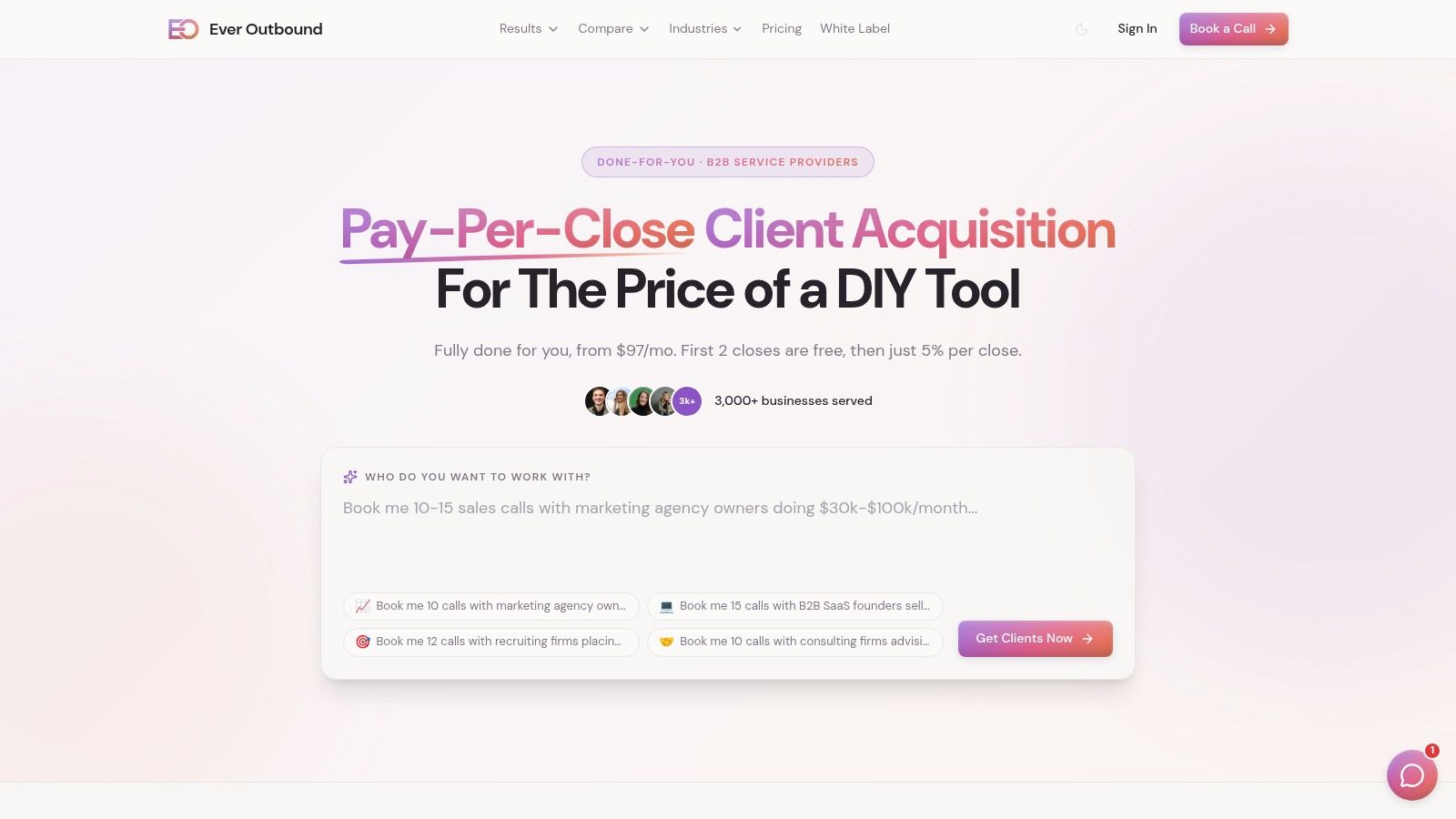
Ever Outbound Inc. is a fully managed B2B client-acquisition service for agencies, SaaS companies, consultants, and service firms that want qualified calls without staffing an outbound desk. Plans start at $97/month plus a 5% commission on deals closed from the service. The first two closes are commission-free. You pay for infrastructure and for revenue that closes, not for a sender license you still have to operate.
Human researchers build and verify prospect lists. Human copywriters write personalized, multi-step outreach. Appointment setters follow up and book qualified meetings on your calendar. AI supports research and setting. It does not invent the offer or run the campaign alone. Domain setup, warmup, and deliverability monitoring sit underneath, with campaigns, replies, and bookings visible in an online command center.
What you still own
You approve copy, targeting, and claims. Then you show up and close. Ever Outbound owns list building, warmed domains, mailbox health, and the reply inbox. That swap is the point. You stop watching bounces and complaints on Friday, and you also lose live control of every sequence and inbox. A fuzzy offer or a leaky close still fails after the meeting is booked.
Managed sending does not erase your legal exposure. The Federal Trade Commission CAN-SPAM compliance guide notes each separate violating email may incur a civil penalty of up to $53,088, and businesses remain responsible for vendors sending on their behalf. Read whether Ever Outbound is legit before you hand over domains and claims.
Who shouldn't buy it: Teams that want hands-on control of every inbox, sequence, and reply. Agencies can resell the fulfillment white-label and keep the client relationship. If you need to rewrite sequences every morning, buy a DIY sender instead.
2. Instantly
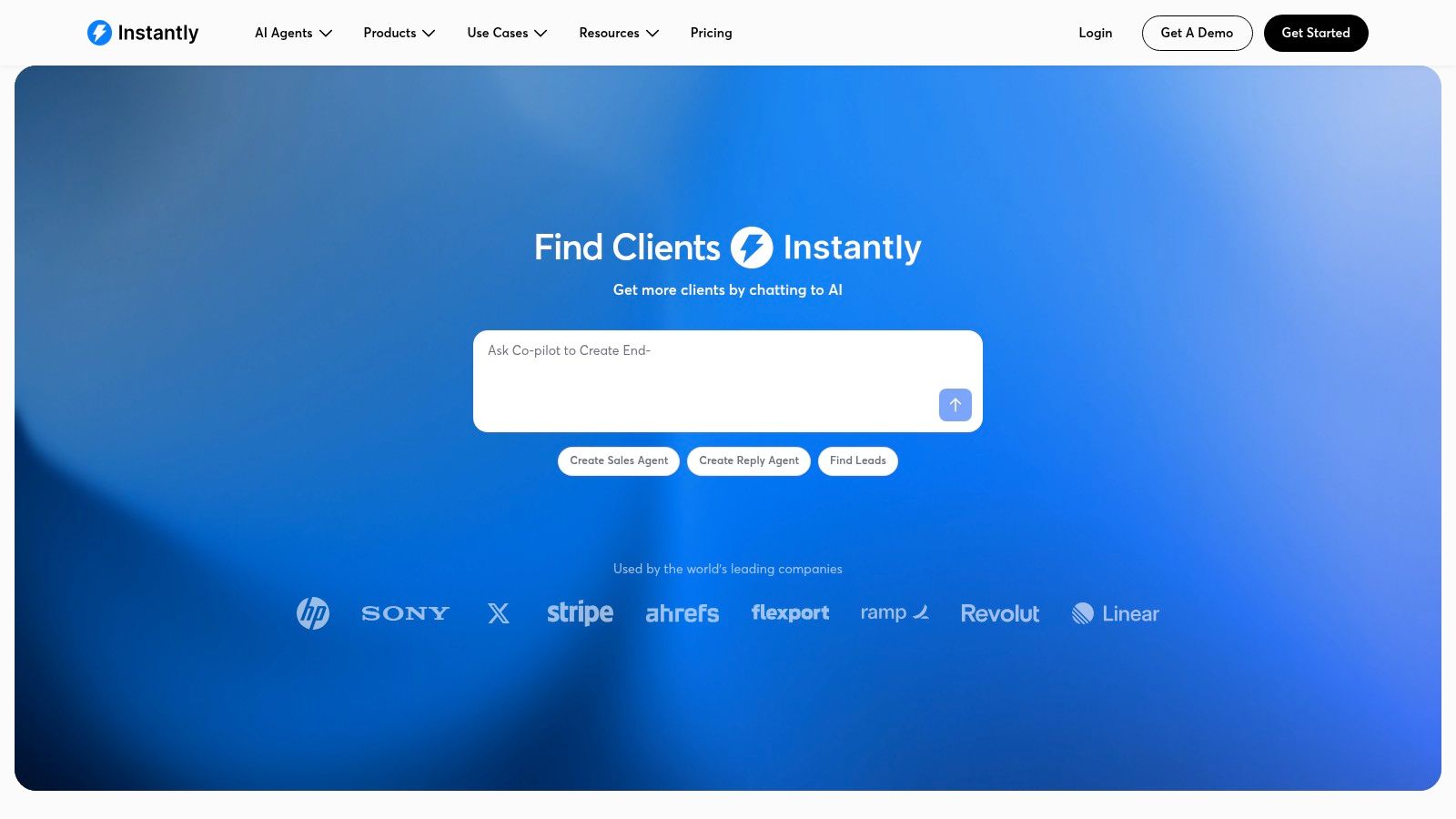
Instantly is the obvious pick when your main job is running cold email across lots of sending accounts without wrestling a bloated sales suite. You get campaign sequences, a shared reply inbox, warmup, and deliverability tools in one place. Lead finding and AI features sit in the broader platform or selected plans.
That's a clean setup for agencies, SaaS teams, and consultants who already arrive with decent prospect data. The Growth plan at $47/month includes limits of 1,000 uploaded contacts and 5,000 emails per month, so do the math before assuming entry pricing covers your pipeline target.
Infrastructure warning: More inboxes under one primary domain don't automatically dodge bulk-sender rules. Google's bulk sender guidance counts traffic across mailboxes and subdomains under the same primary domain toward its bulk classification approaching 5,000 messages per day to personal Gmail accounts.
Instantly won't research your market, sharpen your offer, or turn lukewarm replies into meetings. That's still your operator, your copywriter, and your calendar. Data and AI may also require separate plans or credits, which is where the tidy headline price starts growing teeth.
Read the direct Ever Outbound and Instantly comparison if you're weighing software against done-for-you execution, since we're pay-per-close there too.
Who shouldn't buy it: A founder with no verified list, no copy help, and no time to monitor domain health daily. You'll own authentication, mailbox rotation, suppression, and recovery when placement drops. Instantly gives you the sending machine. It doesn't give you the outbound department to run it well.
3. Smartlead
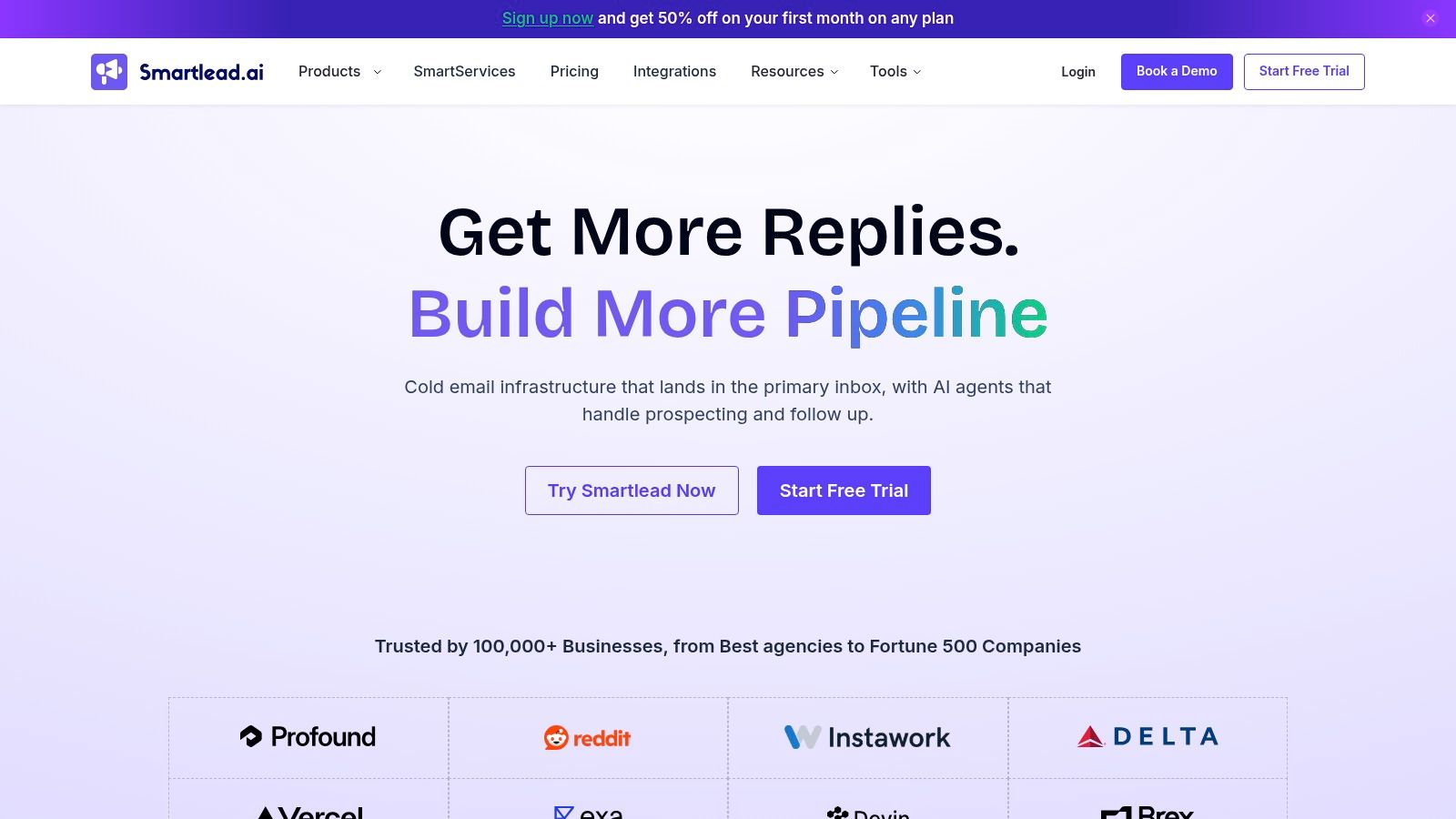
Agencies running several clients at once do not need another contact database. They need separate mailboxes, separate campaigns, and one place where replies do not vanish. Smartlead is built for that operational load. It puts weight on inbox rotation, warmup, and a centralized master inbox, and it does not treat a built-in list as the answer to targeting.
Smartlead's published pricing starts at $39/month for base plans and $94/month for Pro, so check the Smartlead pricing page for current rates. Higher tiers add agency workspaces and white-label capabilities. Published contact and send limits make early budgeting easier. Infrastructure and verification extras still push the bill up once you add domains, mailboxes, and list cleaning.
The work Smartlead doesn't hide
- Authentication stays yours: Publish valid records for every sending domain and watch alignment, not just campaign activity.
- List quality stays yours: Smartlead won't turn purchased guesses into decision-makers.
- Recovery stays yours: Someone has to pause sending when bounces or complaints deteriorate.
Ignore that workload and placement drops before the campaign report looks bad. Mailgun's email authentication research reported 66.2% of senders used both SPF and DKIM, while 53.8% reported using DMARC in 2024. Authentication is baseline infrastructure now, not a competitive trick.
The operating model is the clear split. Read the Ever Outbound and Smartlead breakdown. Ever Outbound is pay-per-close. Smartlead charges you to run the sending machine yourself, including domain health, suppression, and reply triage.
Who shouldn't buy it: Teams expecting prospect data, offer strategy, and human reply handling inside the subscription. Smartlead fits operators who already segment, verify, and write, and who want infrastructure control. If nobody on the team can explain SPF, DKIM, and DMARC alignment, the next hire is deliverability expertise, not another sender.
4. lemlist
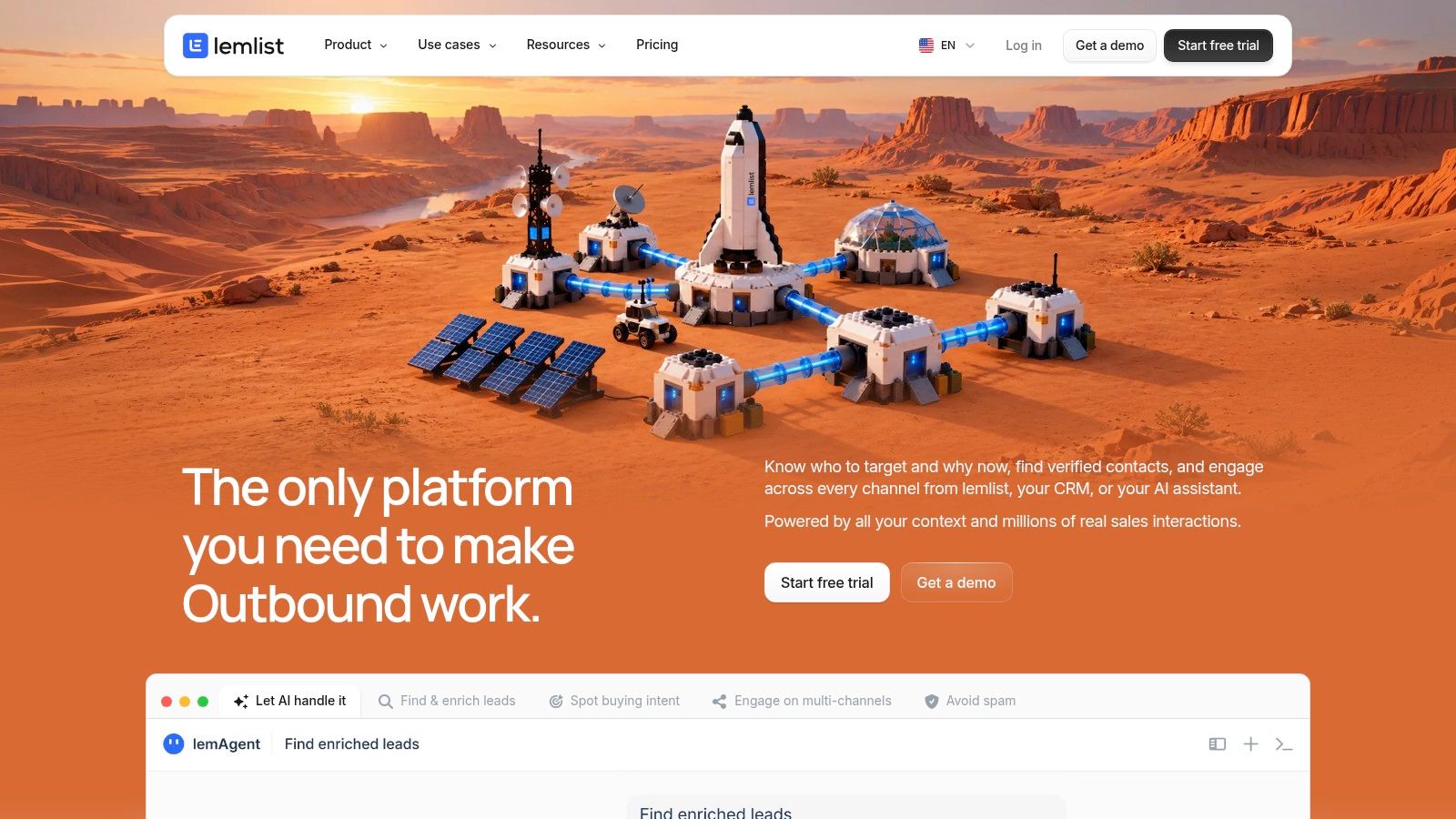
lemlist makes sense when email is only one move in a wider sequence. It combines cold email with LinkedIn actions, other touchpoints, a lead database, email and phone finding, warmup, and CRM integrations. Used well, that reduces the number of tabs your SDRs live in.
The Email plan is listed from $69/month month-to-month or $55/month billed annually. Multichannel plans start at $109 per user/month monthly or $87 per user/month annually. Email-only pricing based on sending volume can suit lean teams, but per-user multichannel pricing changes fast as headcount grows.
Business email isn't one uniform channel either. Radicati's Email Statistics report for 2024 to 2028 segments users by business use, cloud versus on-premises accounts, regions, and countries. That segmentation matters because mailbox mix, geography, and provider rules shape how you should pace and personalize campaigns.
Where the bill creeps
Check lead-data credits, add-ons, and exactly which channels your plan includes before rollout. A multichannel sequence also creates more failure points. One sloppy LinkedIn step can undermine an otherwise relevant email.
The Ever Outbound and lemlist comparison is useful if you're deciding between operating channels yourself and outsourcing execution. We're pay-per-close, so the comparison is labor and control versus outcome-based commission.
Who shouldn't buy it: A two-person team that only needs straightforward email sequences. You'll pay for breadth you won't use and spend setup time coordinating touches your prospects may not need. Buy lemlist when your reps work multiple channels every week, not because multichannel sounds more advanced in a board update.
5. Reply.io
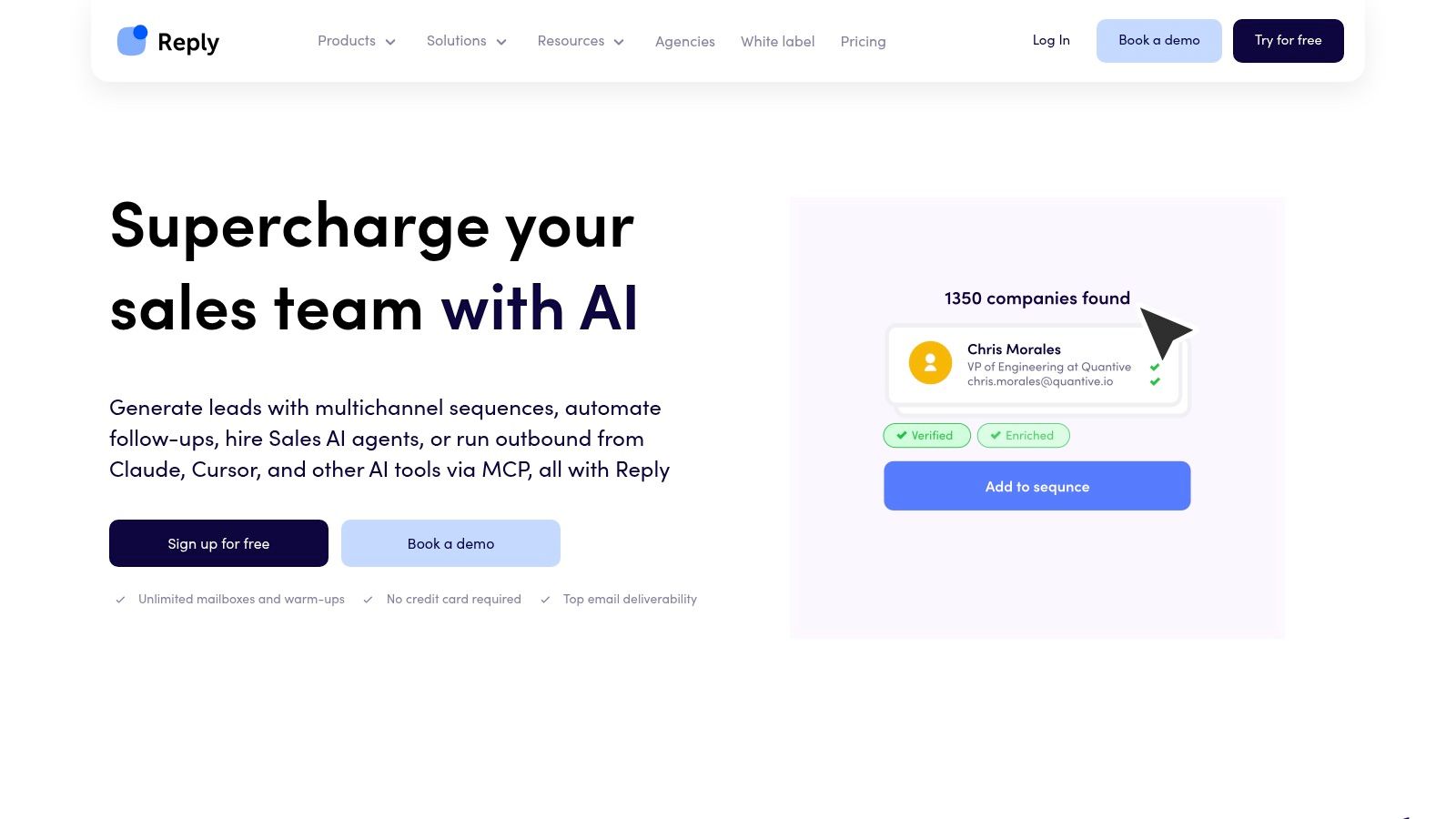
Reply.io is less a bare cold-email sender and more a structured sales-engagement system. You can run email sequences, then add LinkedIn, calls, or SMS where the cadence calls for it. AI helps with sequence creation, personalization, and reply handling, and there's a separate AI SDR product for teams keen to automate harder.
Email Volume pricing starts at $59/month, multichannel starts at $99/month, and AI SDR and agency options are priced separately. Unlimited follow-ups for active contacts sound generous, but unlimited mailbox and email language remains subject to a fair-use policy. Read that before forecasting heroic volume.
Don't judge this category by opens. The Smartreach State of Cold Email report reports average cold-email reply rates drifting from 8.5% in 2019 toward roughly 3% to 5% in 2026, while privacy preloads and security scanners distort open and click signals.
That makes positive replies, qualification, show rate, opportunities, and closed revenue your scoreboard. Reply.io can organize the cadence, but your team still has to define what counts as a real outcome and stop bot activity from inflating the celebration.
See the Ever Outbound and Reply.io comparison for the managed-service contrast. We're pay-per-close, not another seat-based cadence to administer.
Who shouldn't buy it: Teams seeking only basic cold-email sending. You'll carry suite complexity, potential channel fees, and AI add-ons you may never trust with live prospects. Reply.io fits sales teams with defined cadences, multiple touch types, and someone accountable for reviewing automated replies before a prospect gets a confidently wrong answer.
6. Mailshake
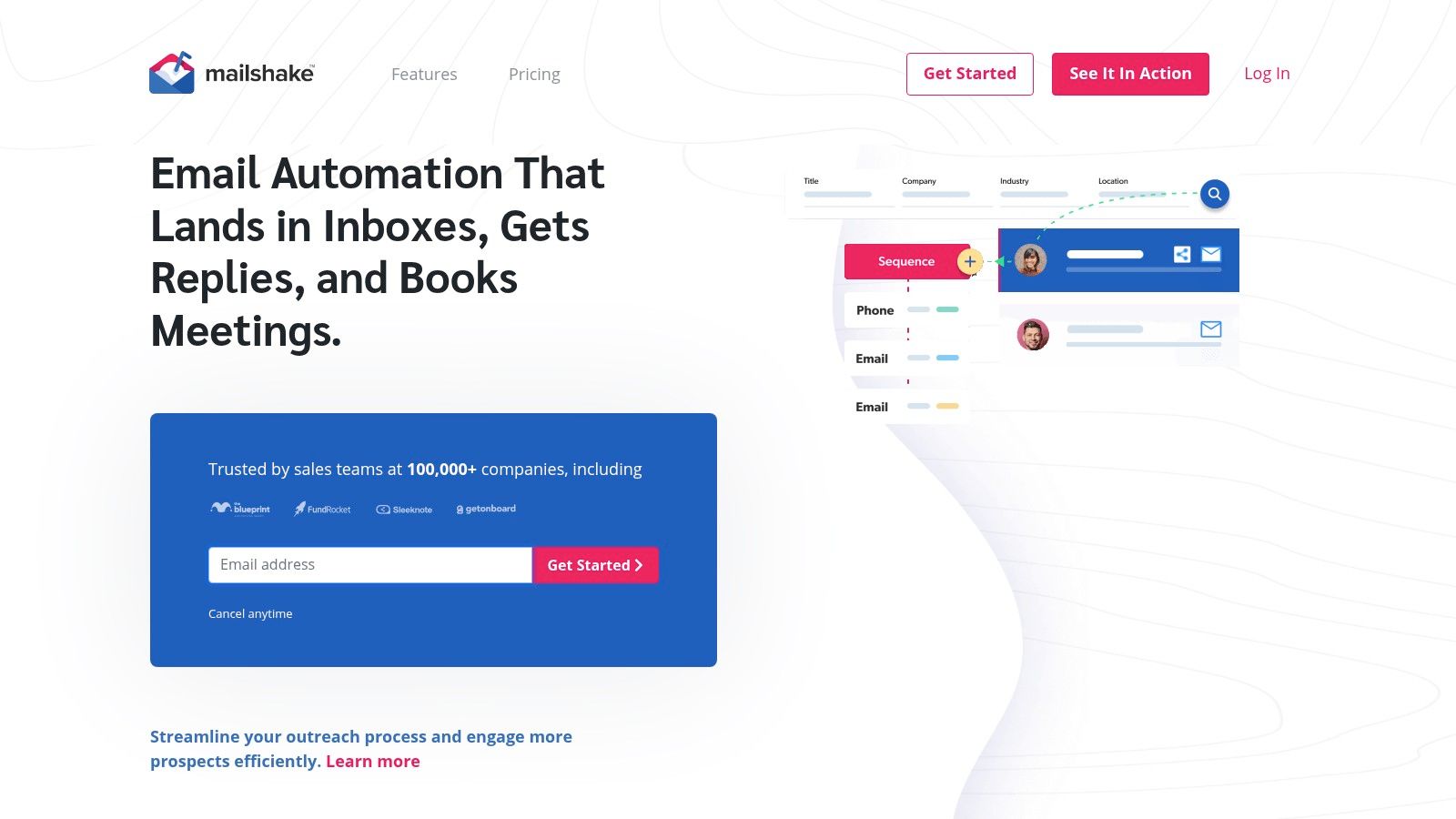
Start small, send carefully, and don't buy a command center for a one-person campaign. That's where Mailshake earns its place. It offers automated sequences, scheduling, A/B testing, warmup and verification on listed plans, plus CRM integrations as you move up.
Monthly plans are listed as Starter at $29, Email Outreach at $49, and Sales Engagement at $99, with discounted annual rates also shown. The top tier adds a dialer and calling features. Lower down, the trade-offs are plain. Starter is limited to one email address and 1,500 sends per month.
Advanced inbox rotation and stronger CRM features sit on the higher Email Outreach plan. Agency use with unlimited email addresses requires contacting sales, which means your eventual cost isn't sitting neatly on the public pricing page.
A compliance trap for small UK lists
Recipient type matters. The ICO business-to-business marketing guidance explains UK PECR treats corporate subscribers differently from individuals and sole traders, where specific consent or the soft opt-in generally applies. A simple sender doesn't make that distinction for you.
Mailshake includes AI email-writing assistance on listed plans, which helps with drafts. It doesn't validate your market, permission basis, or follow-up discipline.
Who shouldn't buy it: Agencies planning serious multi-client volume from day one, or teams that need advanced mailbox-pool controls immediately. Mailshake is strongest for small businesses and compact sales teams testing structured outreach inside an existing CRM stack. If you're already arguing about workspace permissions and domain pools, you've probably outgrown the starting lane.
7. QuickMail
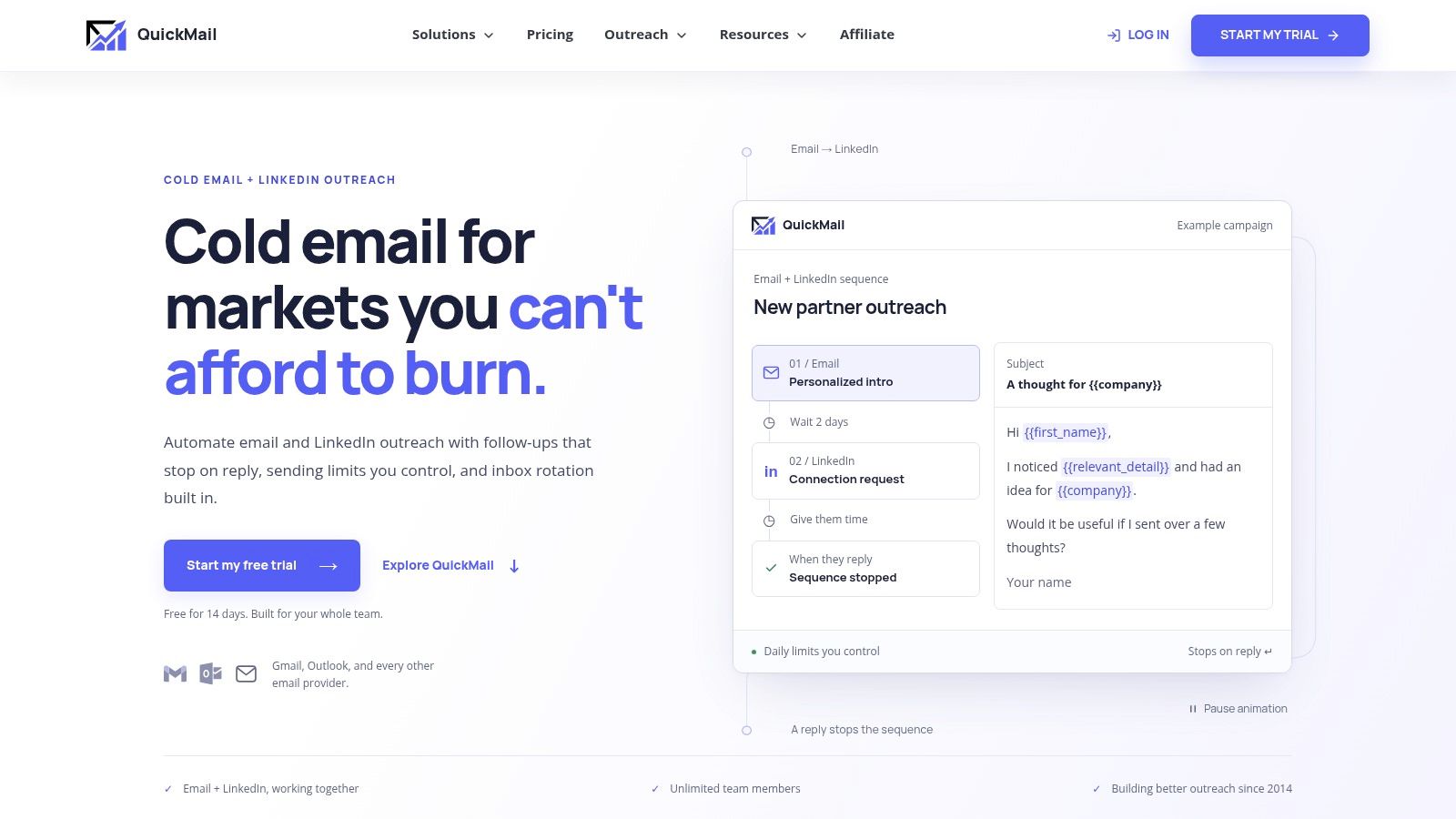
QuickMail keeps its pitch refreshingly operational. Connect email and LinkedIn senders, use the included AutoWarmer on listed plans, and scale contact and send allowances as the team grows. It doesn't pretend every prospecting problem disappears once the sequence is switched on.
Published tiers are Starter at $49/month, Growth at $99/month, and Agency at $299/month. Starter and Growth list a 14-day free trial, and listed plans include unlimited senders and users. Use that trial to test your actual CRM workflow, not a toy campaign with ten friendly contacts.
Starter still caps you at 1,000 uploaded contacts and 5,000 monthly sends. The Agency plan includes multiple workspaces, with more available for a fee. That's fair, but agencies should model workspace growth before client number six arrives and finance asks why the tool bill jumped.
Deliverability discipline matters more than sender count. Google's sender guidelines say senders to personal Gmail accounts should keep spam rates below 0.3%, while Google recommends staying below 0.1%. Unlimited senders don't protect you if recipients keep hitting spam.
Who shouldn't buy it: Teams needing a bundled prospect database or a highly customized CRM workflow they haven't tested during the trial. QuickMail suits growing teams and agencies that bring their own lists and want clear tier progression. Your operators still own verification, daily volume controls, complaint monitoring, and the decision to pause a domain before a small problem becomes a bonfire.
8. Woodpecker
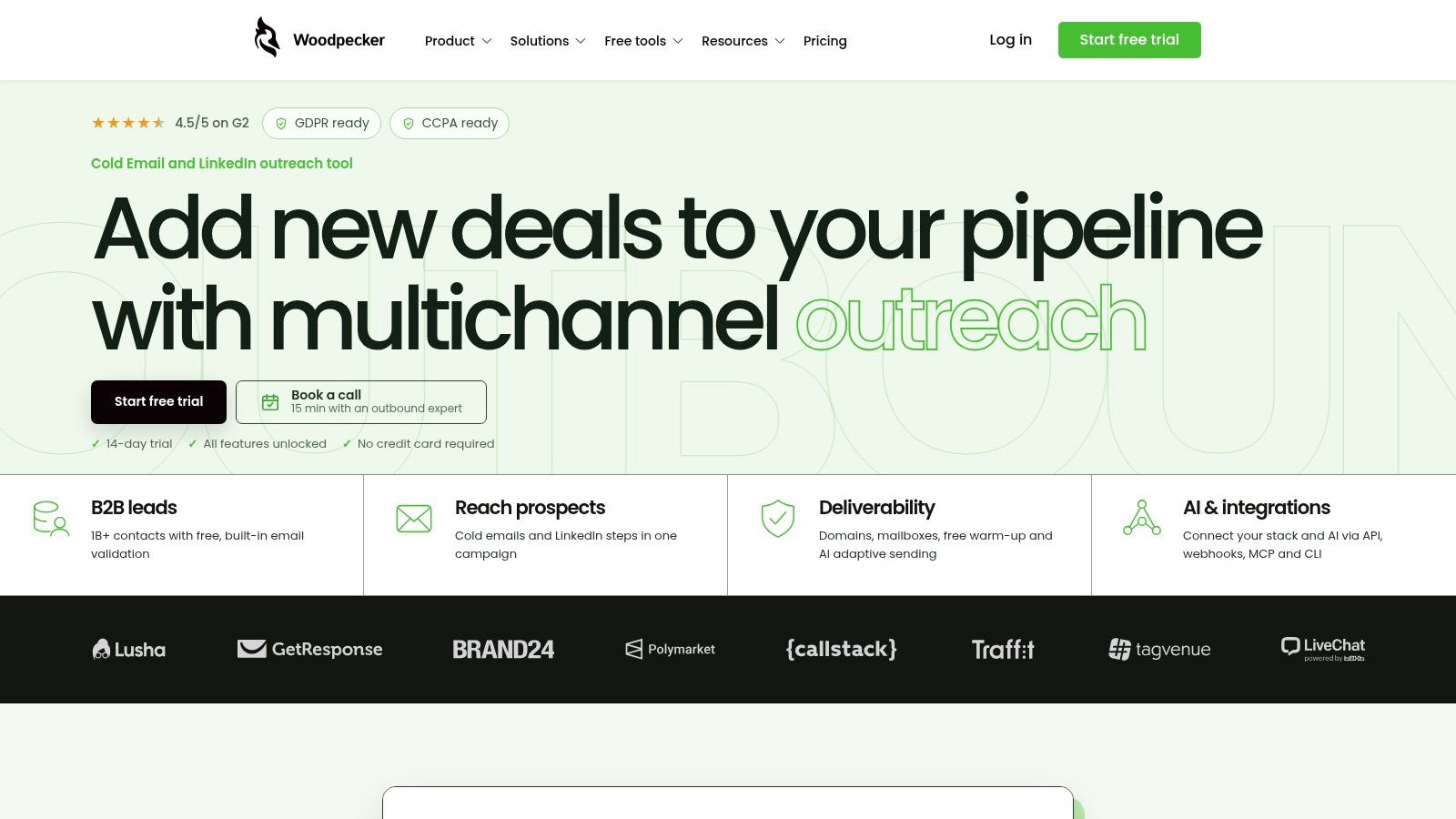
Pricing based on people contacted sounds elegantly fair. Then you rerun a prospect through a second campaign and discover fairness has fine print. Woodpecker prices around contacted prospects, selected add-ons, and sending capacity, with a starting tier shown at $35.
The displayed configuration includes unlimited email accounts and team members, plus email and LinkedIn options. Verification and warmup appear in the pricing configuration, and prospecting or deliverability add-ons can round out the stack. That flexibility is useful when your team size is larger than your actual outreach reach.
Watch the repeat-contact meter
- Overlapping campaigns: A prospect contacted in multiple campaigns may count more than once.
- Add-on creep: Your final subscription depends on the options you switch on.
- Forecasting: Seasonal pushes and reactivation campaigns can make costs jump unexpectedly.
Woodpecker's own benchmark context argues for tighter campaigns anyway. Its cold email benchmarks dataset of 56,614 campaigns reported a 1.5% median reply rate, while smaller campaigns targeting 0 to 50 prospects achieved 2.7%. Sending to everyone twice is rarely the genius move it appears to be in a spreadsheet.
Who shouldn't buy it: Teams that recycle the same accounts through overlapping campaigns without tight suppression and campaign governance. You'll make costs less predictable and annoy prospects efficiently. Woodpecker fits disciplined teams that segment sharply, track prior contact, and prefer paying for outreach reach over seats. Sloppy list reuse turns its pricing model into a penalty for your own habits.
9. Saleshandy
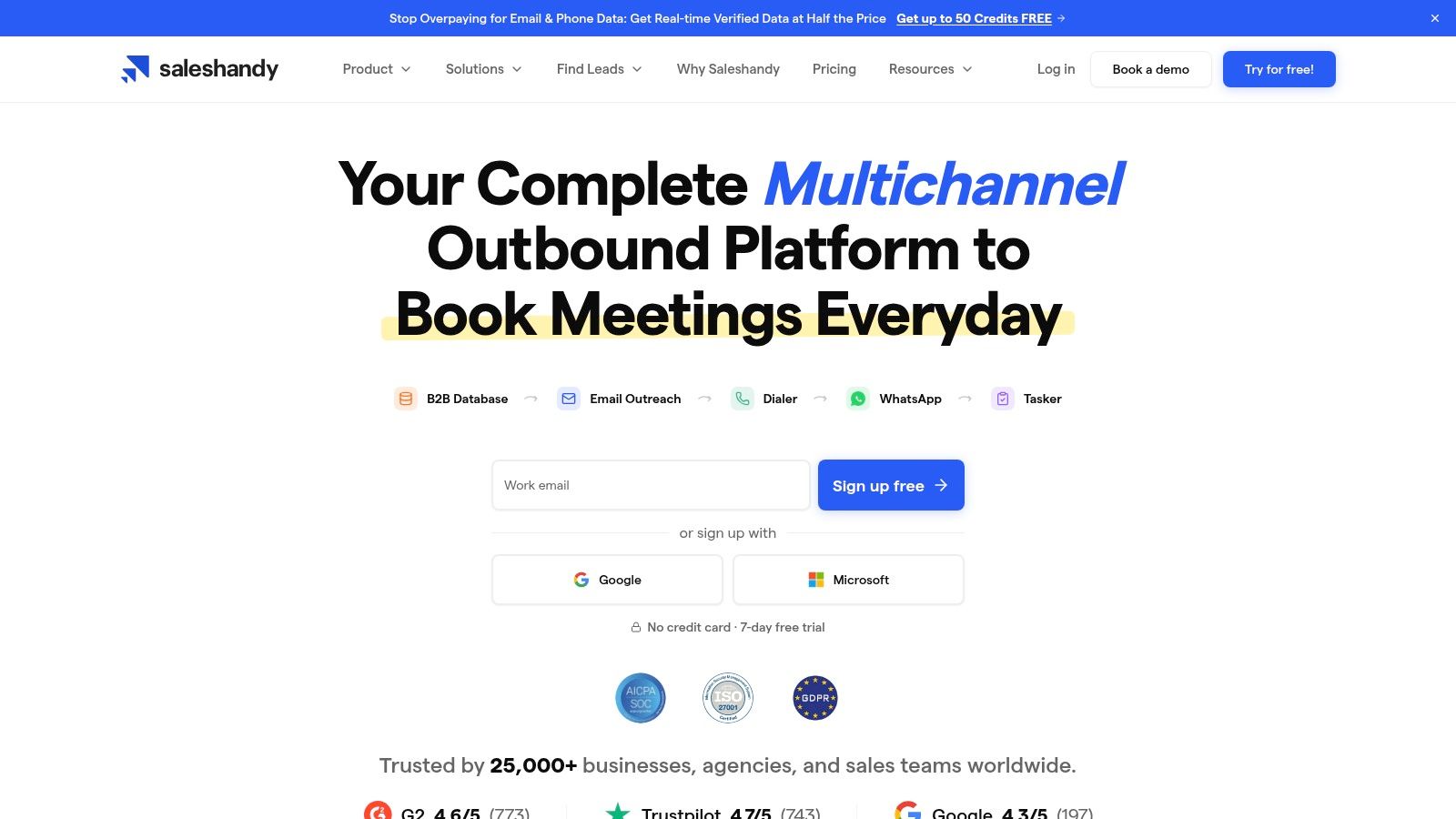
If your current workflow involves exporting leads from one tool, cleaning them in a spreadsheet, and uploading them somewhere else, Saleshandy will feel liberating. It combines prospect search, enrichment, email verification, and outreach sequences in one subscription. Workflows can also involve calls, WhatsApp, and tasks.
Listed plans include Starter at $41/month monthly or $34/month annually, Pro at $99/month monthly or $76/month annually, and Scale at $189/month monthly or $149/month annually. A 7-day trial is listed. Pricing isn't based on connected email accounts, and listed plans include unlimited email accounts.
Starter is single-user and limits active prospects and monthly sends. CRM integrations, more users, and agency white-labeling require higher tiers. So the key question isn't whether Saleshandy bundles lead finding. It's whether your credits and active-prospect limits match the campaign calendar you've promised sales leadership.
Bundled data also doesn't settle permission. The ICO electronic mail marketing guidance requires UK consent to be freely given, specific, informed, and unambiguous, with withdrawal as easy as giving consent. Your source and contact type still need documenting.
Who shouldn't buy it: A collaborative team expecting CRM integration and multi-user workflows on Starter, or a high-volume sender who hasn't modeled lead credits. Saleshandy suits small and midsize B2B teams that value prospecting and sending together. It won't rescue weak filters. Enrichment can fill fields beautifully while still handing you the wrong humans.
10. Snov.io
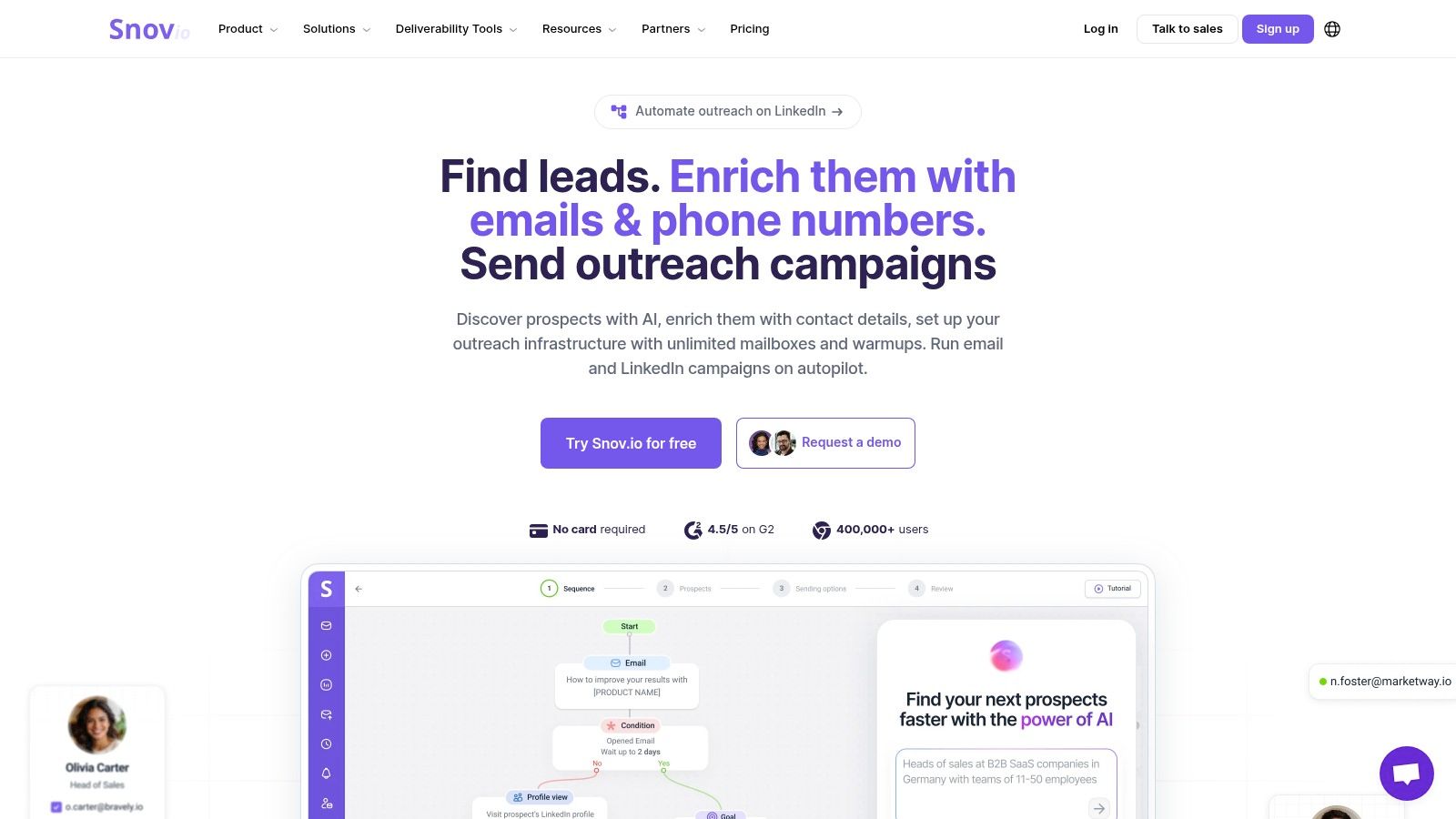
Snov.io is the starter workbench version of a cold email outreach platform. It combines prospect discovery, email finding, verification, outreach sequences, and warmup under one vendor. For a small team testing a niche, that convenience beats stitching together four subscriptions before the first reply arrives.
There's a free plan with limited credits, recipients, and a warmup slot. Paid Sales Suite plans start at $39/month, and Pro plans start at $99/month. LinkedIn automation and enrichment are separately priced services, so the all-in-one story has optional chapters.
Treat credits like media spend. Every careless search, duplicate prospect, and unverified upload eats budget before a single decision-maker sees your message.
Usage planning is the whole game here. Map how many prospects you'll find, verify, and contact each month, then compare that with recipient quotas. A team can outgrow the free plan in one enthusiastic afternoon of broad searching.
Snov.io also won't supply campaign judgment. You'll still segment by role, company fit, geography, and trigger, then verify contacts again before launch if the list has aged. Prospecting breadth is not targeting.
Who shouldn't buy it: Large senders whose main need is deep campaign infrastructure across many domains and clients. They'll likely prefer a platform more focused on mailbox operations and deliverability controls. Snov.io fits smaller teams validating markets, building first lists, and learning outreach mechanics without a heavy upfront stack. Start narrow, spend credits on verified decision-makers, and let positive replies tell you where to expand next.
Cold Email Outreach Platform Comparison
Read this grid by cost model and leftover work, not by which row lists the most features. A lower sticker price usually means your team still owns domains, warmup, verification, and reply triage. That daily infrastructure load is the main cost on self-serve tools.
| Item | Starting Price | Best For | Standout Capability |
|---|---|---|---|
| Ever Outbound Inc. | $97/month plus 5% of closed deals | B2B businesses that want managed outbound and booked sales calls, not a sending stack to run | Human-led prospect research, personalized outreach, follow-up, and meeting booking |
| Instantly | $47/month | Teams managing campaigns across multiple sending accounts | Campaigns, reply management, warmup, and deliverability tools |
| Smartlead | $39/month | Outbound teams and agencies managing multiple inboxes | Inbox rotation, warmup, and centralized reply handling |
| lemlist | $55/month billed annually or $69 month-to-month | Teams coordinating email and multichannel outreach | Prospecting and outreach across email and LinkedIn |
| Reply.io | $59/month | Sales teams seeking structured email or multichannel cadences | AI-assisted sequences with optional LinkedIn, calls, and SMS |
| Mailshake | $29/month | Small businesses and sales teams seeking email outreach | Email sequences with optional dialer and CRM integrations |
| QuickMail | $49/month | Growing teams and agencies running email and LinkedIn outreach | AutoWarmer and agency-focused plans |
| Woodpecker | $35/month | Teams wanting costs tied to contacted prospects | Contact-based pricing with email and LinkedIn options |
| Saleshandy | $34/month billed annually or $41 month-to-month | B2B teams wanting prospecting and outreach in one product | Prospect search, enrichment, and campaign sending |
| Snov.io | Free plan; paid plans from $39/month | Smaller teams seeking an all-in-one prospecting workflow | Email finding, verification, outreach, and warmup |
Month-to-month rates on lemlist and Saleshandy sit above the annual price, so a short test costs more per month than a year-long commit. Woodpecker bills by contacted prospects, which keeps idle capacity cheaper and busy volume more expensive. Ever Outbound adds 5% of closed deals on top of $97/month, which fits teams that want research, copy, follow-up, and booking handled and will share revenue when a deal closes. Skip that row if you want full control of copy and sending infrastructure and would rather not pay a commission on closed business. Flat inbox tools still fail when nobody watches warmup and domain health.
Match the Platform to Your Pipeline, Not to the Feature Grid
Start with what your team already has, not what a pricing page wants to sell you. If you've got verified lists, sharp in-house copy, and an operator who watches domain health, self-serve tools such as Instantly or Smartlead can be perfectly sensible. You're buying sending infrastructure and reply organization, not a pipeline department.
If list building is the bottleneck, bundled prospecting matters more. Snov.io suits small tests, Saleshandy combines search and sending for growing teams, and lemlist adds multichannel coordination when reps work LinkedIn alongside email. Price the credits and active-contact limits against a realistic month, not your most optimistic launch week.
A quick fit check
- Choose email-first control: Instantly, Smartlead, QuickMail, or Woodpecker, provided your team owns authentication, verification, and suppression.
- Choose structured multichannel: lemlist or Reply.io when LinkedIn, calls, or SMS are part of a defined cadence, not decoration.
- Choose compact simplicity: Mailshake for a small team, or Snov.io when prospect discovery and sending need to live together.
- Choose agency packaging carefully: Compare white-label tiers and workspace economics on Smartlead, QuickMail, and Saleshandy before clients multiply.
For another sequencing-focused view, The Social Search sequencing tool comparison is worth a look before you lock in your stack.
Then there's the labor question most comparisons bury. Add the hours for offer work, list research, verification, domain setup, copywriting, inbox monitoring, reply qualification, follow-up, and booking. That's the true DIY cost. Ever Outbound takes the other route because we're pay-per-close, with 5% commission on closed deals and the first two closes commission-free, plus the recurring infrastructure fee you should confirm upfront.
Don't measure success by opens or raw replies. Track positive-reply rate, qualified-reply rate, booked meetings, show rate, opportunities, and closed revenue. Keep unsubscribes and complaints visible too. A campaign that books calls while harming your domain is borrowing pipeline from next quarter.
Whatever you choose, warm domains properly, verify every contact, authenticate every sending domain, and control daily volume per mailbox. Segment tightly, suppress prior opt-outs and recent contacts, and pause fast when bounce or complaint signals worsen. Scale only after a small campaign proves the offer earns qualified replies. The best cold email outreach platform is the one matched to your team's real capacity. Software sends messages. Operators, or a managed team, protect reputation and turn replies into revenue.
If you'd rather skip hiring, list building, domain warmup, copywriting, and reply chasing, Ever Outbound Inc. runs the whole outbound motion for you and books qualified prospects onto your calendar. We're pay-per-close, so you focus on showing up and closing while our human-led team handles the campaign work behind the scenes.