October 28, 2026
7 Best Lead Generation Services for B2B in 2026
The cheapest lead list is usually the most expensive mistake. Buying more contacts rarely fixes a pipeline problem. Booked, qualified conversations do, provided your team can turn them into customers.
The popular advice is to buy a bigger database, automate the outreach, and keep increasing volume. That's an excellent way to become very efficient at contacting the wrong people. EmailScout's lead list building playbook is a useful starting point for list-building work, but a list still isn't a managed acquisition program.
The best lead generation service depends on what you need someone else to own: research, messaging, calling, appointment setting, or the handoff into sales. These seven providers offer different combinations, with retainer-style, custom-quote, flat-fee, and pay-per-close economics.
A disclosure before anyone mistakes this for neutral Switzerland: Ever Outbound is ours, and we're pay-per-close, with a separate monthly infrastructure fee. We'll spell out that trade-off alongside the alternatives. Compare the actual operating model and contract, not just the headline price. Cheap meetings with people who can't buy are still expensive meetings.
Table of Contents
- 1. Ever Outbound Inc.
- 2. Belkins
- 3. Sopro
- 4. Martal Group
- 5. Callbox
- 6. memoryBlue
- 7. SalesHive
- How the Seven Providers Compare on Pricing, Channels, and Best Fit
- Match the Provider to Your Pipeline, Not Your Pitch Deck
1. Ever Outbound Inc.
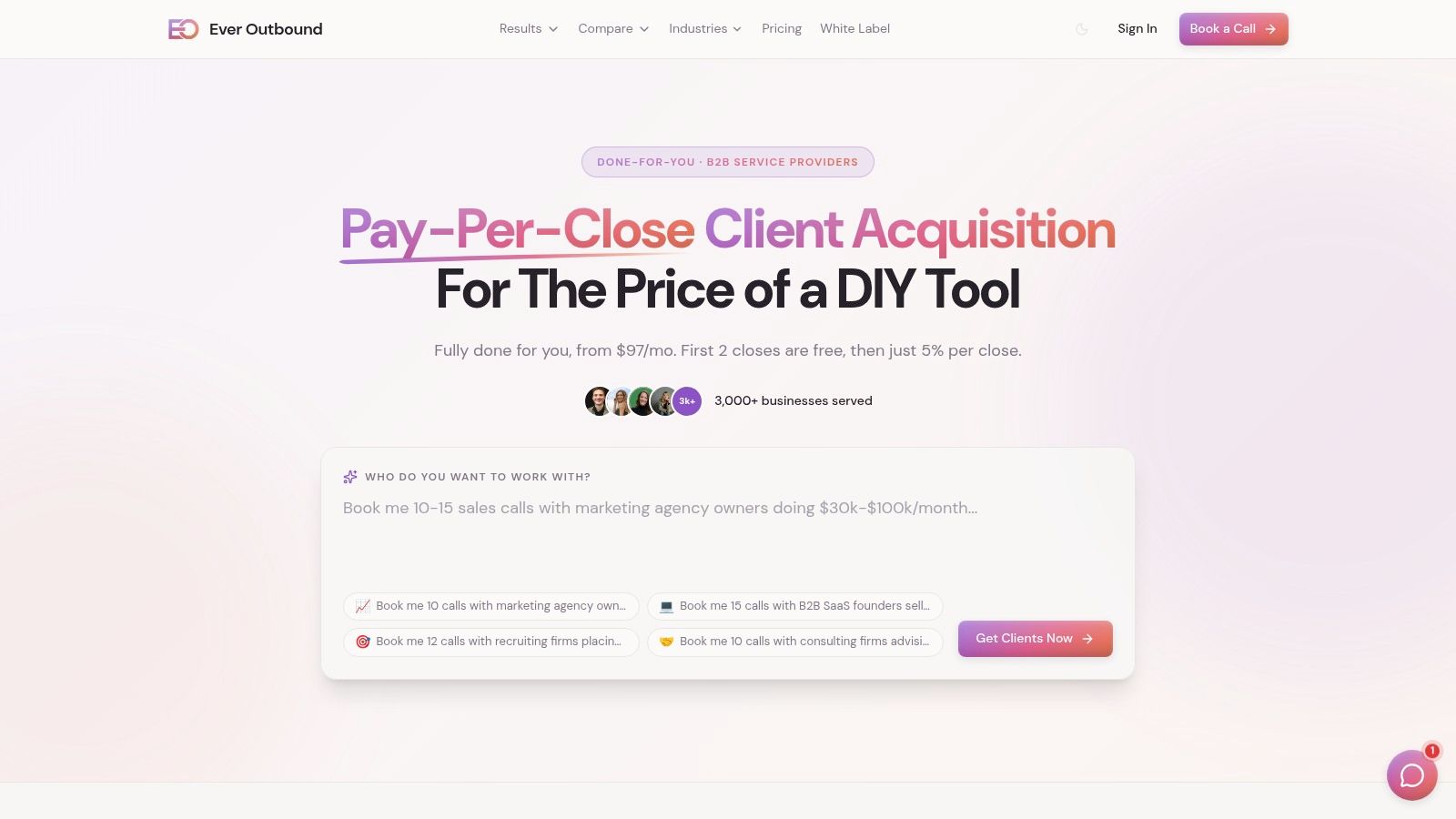
Ever Outbound suits B2B companies with a clear offer and someone ready to close qualified calls. Its human research, copywriting, and appointment-setting team uses AI and managed sending infrastructure to run outbound campaigns for agencies, consultants, SaaS companies, and B2B service businesses.
The team handles offer development, verified prospect lists, personalized outreach, sending setup and warmup, follow-up, and calendar booking. A client platform shows campaign activity, replies, and bookings. Agencies can also choose white-label fulfillment.
What You're Actually Paying For
The Local plan starts at $97/month, with a 5% commission on closed deals. The first two closes are commission-free. Confirm the plan fee and how closed deals are attributed in your agreement before launch.
- Best fit: You have a sellable B2B offer and someone available to take discovery calls and close.
- Operational upside: One managed service covers prospecting, messaging, sending, follow-up, and booking.
- Agency option: White-label fulfillment lets agencies offer client acquisition under their own brand.
- Contract check: Define eligible deals, attribution, and commission terms before the campaign starts.
Where the Trade-Off Lands
Ever Outbound's case studies include The Tax Engineers, with two closed deals in two weeks, and Meraglim Holdings, with 25 qualified meetings in its first month. Those outcomes show what the service has delivered for particular clients, not what every campaign will produce.
Pay-per-close ties part of the provider's compensation to closed business, while the monthly plan fee remains. The model fits buyers who want managed execution and can reliably attend booked calls. It cannot compensate for an unclear offer, an unavailable calendar, or a sales process that fails to follow up after discovery.
2. Belkins
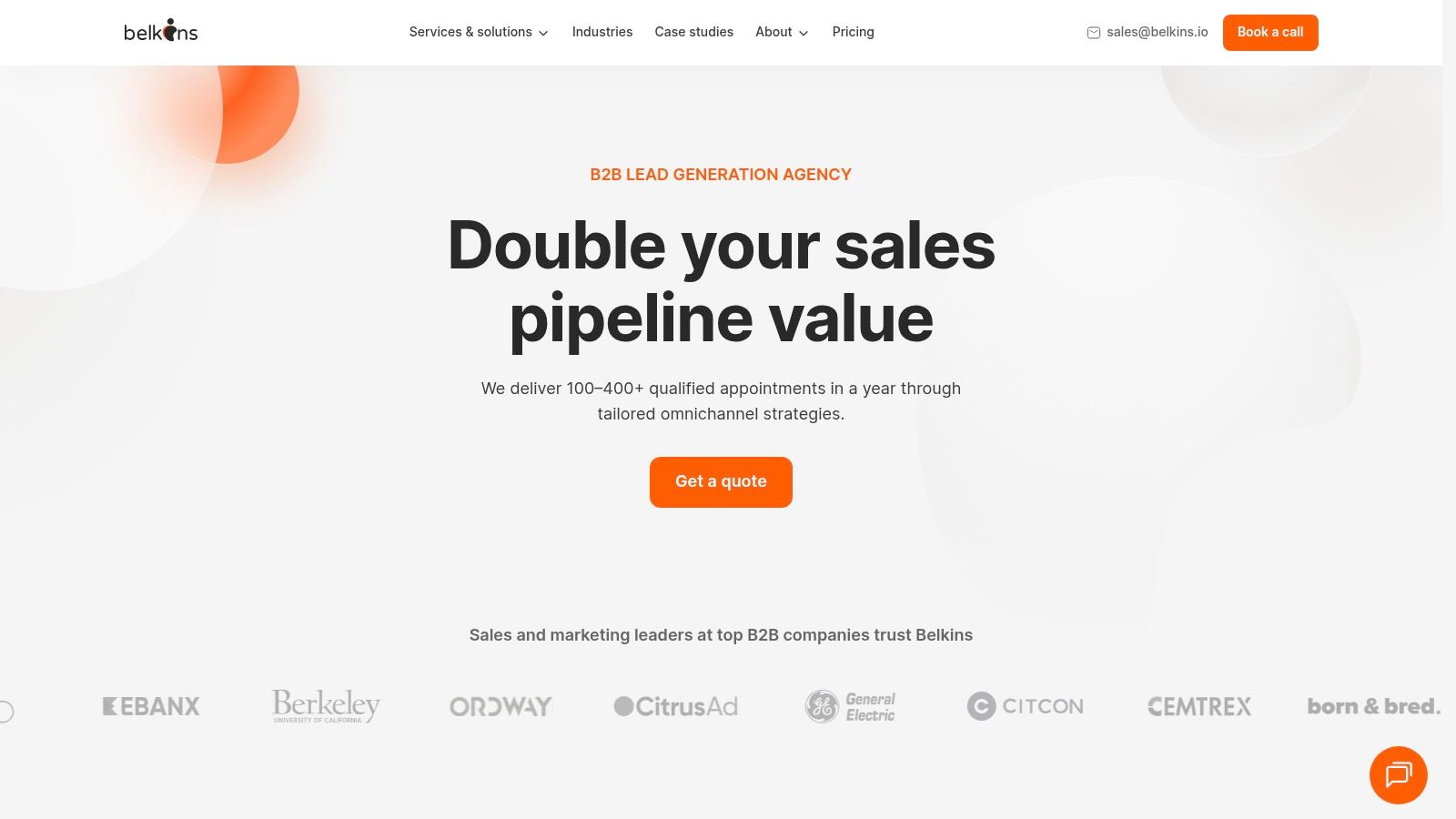
Belkins fits buyers who want a managed prospecting team, not another tool to configure. Its service spans audience research, contact validation, outreach copy, SDR support, and meeting coordination. Agencies and consulting firms should consider it when they need someone to own the campaign rather than deliver a spreadsheet and disappear.
Belkins advertises average starting prices from $5,000, giving buyers a public budget reference rather than a final campaign quote. Treat it as a retainer-style buying decision: you're purchasing ongoing execution, not paying only when a customer signs.
Buy Coverage, Define Acceptance
Its multichannel programs can include email, LinkedIn, and calling, with packages describing no-show recovery and campaign optimization. That breadth can reduce vendor coordination, but only if your agreement specifies which activities your campaign includes.
- What works: Manual research against agreed qualification criteria, supported by account management and outreach execution.
- What costs more in practice: Your internal sales time, onboarding effort, and any scope beyond the agreed program.
- Red flag: A meeting target without written rules for role, company fit, geography, and disqualification.
Don't confuse a managed retainer with pay-per-appointment pricing. Ask how rejected meetings, reschedules, and no-shows affect delivery obligations.
I'd shortlist Belkins when the budget supports a dedicated outsourced program and your team can handle the resulting conversations. If you're still debating which market to target, resolve that first. An outsourced team needs a clear brief, not a scavenger hunt.
3. Sopro
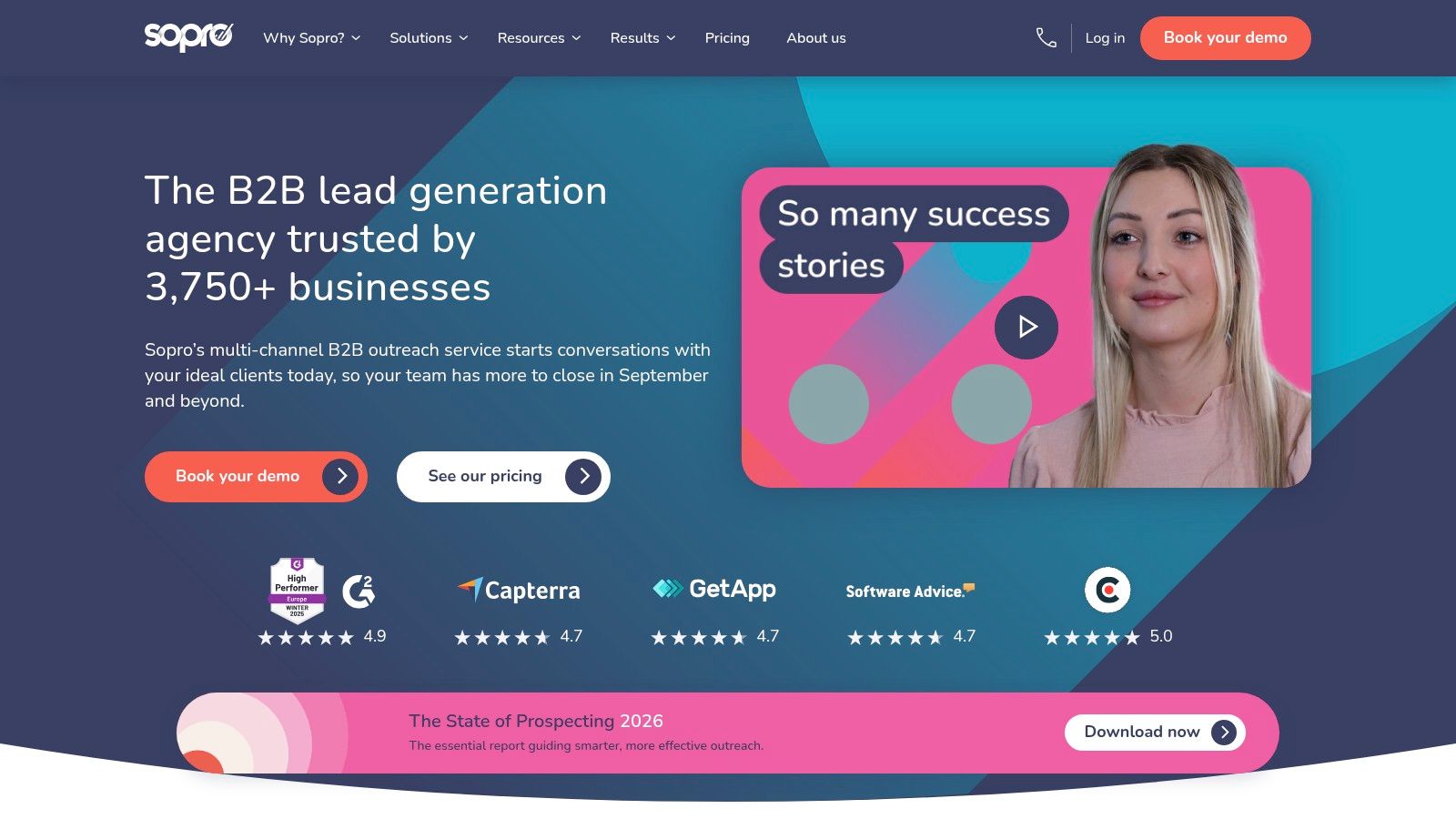
Say your consultancy has a credible offer, a clear audience, and absolutely no appetite for managing outreach software. Sopro belongs on that shortlist. Its managed model combines audience research, personalized prospecting, campaign optimization, and the handoff of replies and conversations.
Sopro uses quote-based pricing, so there isn't a reliable public starting figure to plug into your budget from the material available. Compare proposals on the work included, the handoff standard, and your team's remaining workload, not merely the monthly total.
A hands-off campaign still needs a hands-on owner for interested replies.
Where the Portal Helps, and Where It Doesn't
The Sopro Portal provides visibility into campaign performance and audience activity. That's useful for a founder or marketing lead who wants oversight without becoming the person who checks every sequence.
The practical trade-off is control. A managed team removes operational work, but your organization won't make every day-to-day execution decision as it would with an internal SDR.
- Buy it when: You want people-led prospecting and have a named salesperson ready for the handoff.
- Clarify the quote: Establish which channels, research work, optimization, and reporting are included.
- Watch for: Reporting that celebrates activity without showing whether conversations match your target customer.
Before signing, walk through an interested reply together. Who responds, who qualifies, and when does your salesperson take ownership? That small exercise reveals more than a polished demo because it tests the actual boundary between the provider's work and yours.
4. Martal Group
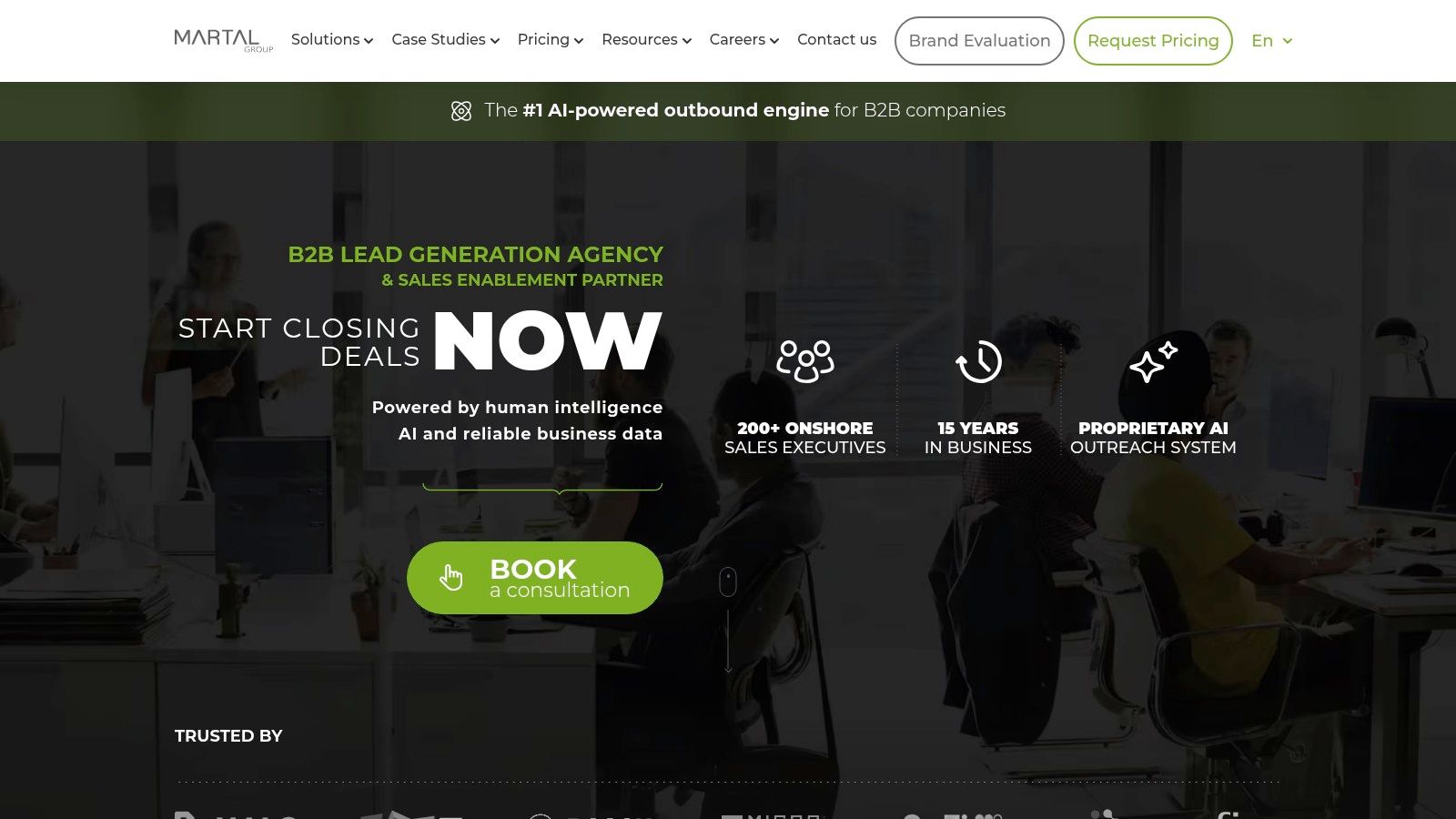
Martal Group is worth considering when your problem extends beyond getting appointments. Its service tiers can reach into sales support, customer onboarding, and account management. That's a different purchase from hiring someone to fill the calendar.
Martal Group describes a three-month pilot for its outbound lead-generation tier, with custom pricing and expanded tiers that may combine a monthly fee with sales commission. A defined pilot gives you an evaluation period, but it doesn't replace written success criteria.
Decide Where Its Responsibility Ends
The outbound program can combine prospect research, persona-based messaging, email, LinkedIn, calling, and appointment booking. Broader support may appeal to a B2B company that lacks internal capacity after the prospect agrees to talk.
Before comparing a lead generation agency model, map your own sales stages. Identify whether you need help creating interest, qualifying opportunities, running later conversations, or supporting new accounts.
- Strong buying scenario: You need outbound plus additional sales coverage and can define those responsibilities.
- Cost consideration: Separate the monthly fee, potential commission, and duties attached to each tier.
- Signing red flag: A broad promise of sales support without named deliverables and ownership.
I'd avoid buying the expanded package because it sounds reassuring. If your closers already run an effective process, additional sales coverage may duplicate work you're doing well.
For the pilot, evaluate prospect fit, held conversations, accepted opportunities, and handoff quality. A busy activity report is not the same thing as evidence that your sales team wants the opportunities.
5. Callbox
Callbox makes more sense for a structured campaign than a tentative experiment. Its campaign-pod approach brings together a dedicated SDR, campaign management, data support, and reporting. Larger or international programs may value that coordination more than a small team testing an unproven niche.
Callbox offers coordinated phone, email, and LinkedIn outreach, with AI-enriched contact data and performance reporting among its stated inclusions. It publishes pricing guidance, but the final scope and cost need direct confirmation; don't budget around an unverified estimate.
Pay for Coordination You'll Actually Use
The appeal is the supporting team, not the channel count alone. A campaign spanning different industries or geographies needs clear targeting, consistent messaging, and someone accountable for routing interested prospects.
McKinsey found that B2B customers use an average of six interaction channels during a purchase journey, while nearly 65% become frustrated by inconsistent experiences across those channels. That supports coordinated execution, not contacting everyone everywhere.
- Best fit: You need calling capacity and campaign coordination across a more involved sales motion.
- Budget reality: A full campaign pod can be excessive for testing a narrow audience or new offer.
- Contract check: Specify target markets, calling coverage, qualification criteria, and reporting ownership.
If you're weighing this against pay-per-lead pricing, compare accepted opportunities and total operating cost rather than delivered names. A pod is useful when you need the team around the SDR. Otherwise, you may be paying for organizational plumbing before you've established demand.
6. memoryBlue
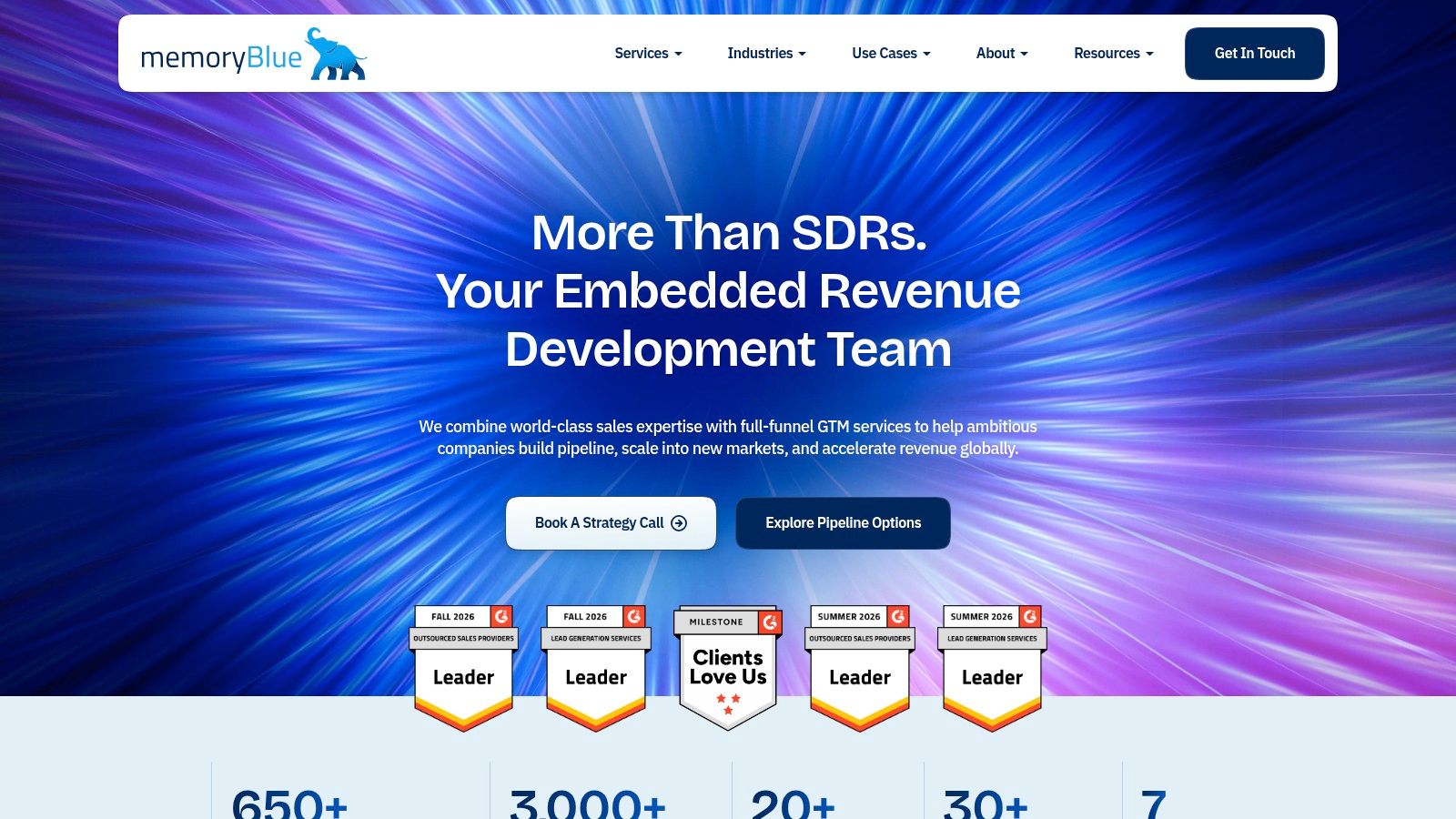
Technology sales can require more than a competent email sequence. memoryBlue is a candidate for teams seeking structured SDR support, especially when the product, audience, or procurement process needs more specialized handling.
memoryBlue provides outsourced prospecting and appointment setting alongside marketing programs such as webinars, downloadable content, and email campaigns. It also offers specialized support for government-facing technology sales, making it relevant beyond a standard commercial SaaS motion.
Validate the Motion Before Adding Capacity
Pricing is custom, with scope, duration, team requirements, and campaign needs affecting the proposal. A fuller SDR and marketing program can be appropriate for an established technology seller, but unnecessarily involved for a founder still testing positioning.
Operator's test: Can you explain who buys, why they buy, and what makes an account unsuitable? If not, write that down before hiring outbound capacity.
The company notes that outbound works best with initial validation of the target customer and value proposition. That's a useful boundary: an outsourced SDR program shouldn't become an expensive substitute for figuring out what you sell.
- Shortlist it for: Technology sales, defined SaaS audiences, or specialized B2G prospecting.
- Clarify ownership: Establish how SDR conversations connect with webinars, content leads, and your internal sales process.
- Avoid the mismatch: Don't buy a broad program when you only need a focused appointment-setting test.
For SaaS companies evaluating outbound, technical fluency matters, but so does commercial judgment. Ask the proposed team to explain your buyer's problem in plain language. Repeating product terminology isn't the same as understanding why someone would take a meeting.
7. SalesHive
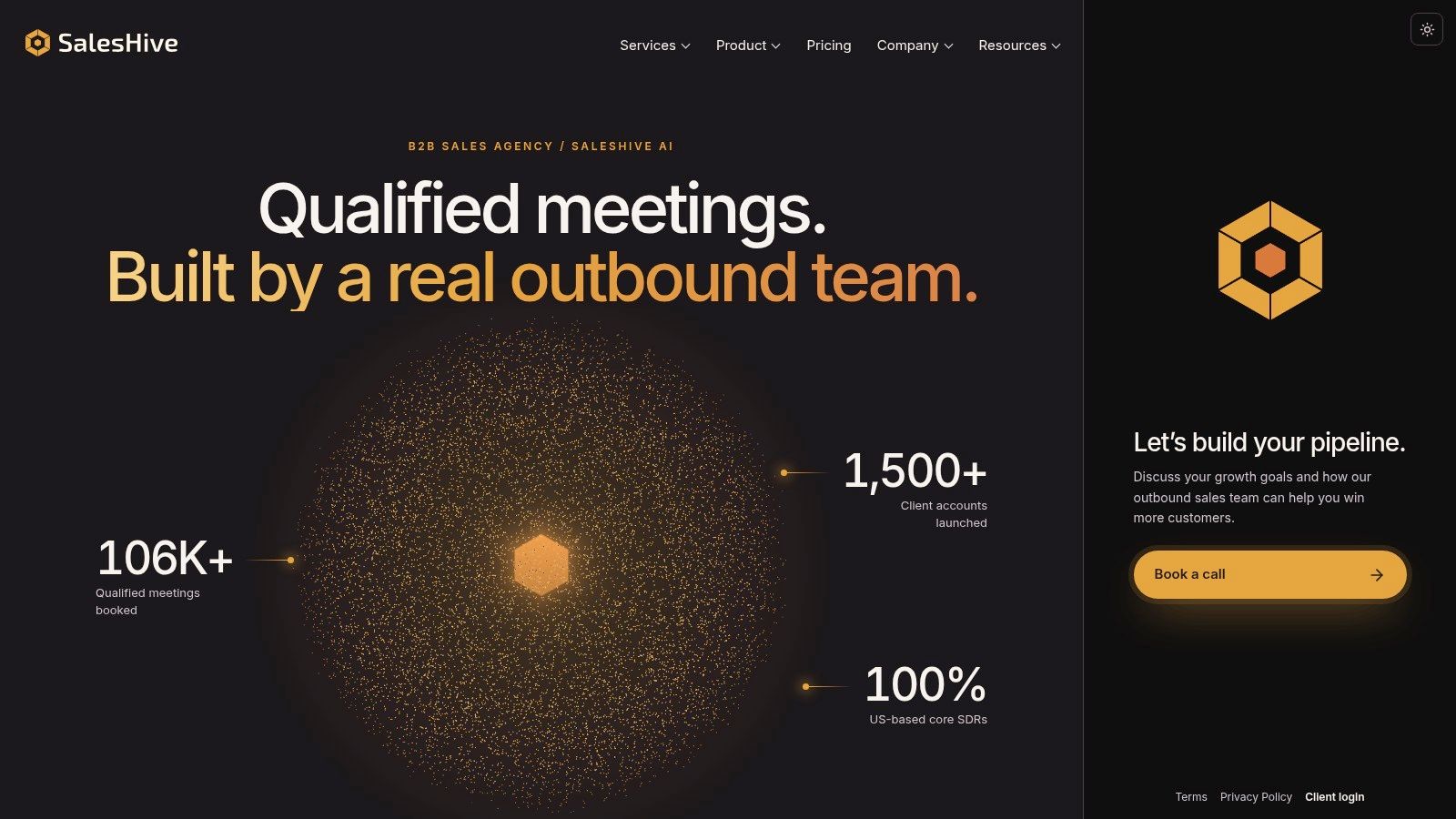
SalesHive's attraction is predictable capacity and flat-fee positioning. Its outsourced sales-development programs can cover cold calling, cold email, lead generation, and appointment setting, with US-based and offshore SDR options.
SalesHive promotes flat monthly pricing and program support that includes strategy, platform, data, and tools, but the actual configuration requires a quote. Flat-fee doesn't mean every proposed team or channel mix costs the same.
Predictable Billing Needs Defined Staffing
A fixed monthly bill helps with planning. It doesn't tell you whether the SDR is dedicated, how much calling capacity you receive, or who handles replies when someone expresses interest.
Those details should drive the comparison with hiring an SDR internally. Include management time, data, tools, coaching, and continuity in the decision, rather than comparing an agency invoice with salary alone.
- Good fit: You want external SDR capacity and a monthly cost you can plan around.
- Staffing question: Confirm dedicated versus shared resources, team location, workload, and escalation coverage.
- Contract question: Put reporting access, notice periods, renewal terms, and data handover in writing.
Public G2 review evidence described for the service is limited and mixed, so don't treat it as a substitute for campaign-specific due diligence. Request relevant references and a concrete explanation of how the proposed team would work your market.
I'd judge SalesHive on the exact staffing proposal, not the flat-fee label. Predictability is valuable when the capacity is clear. Otherwise, you've secured a predictable invoice and left the important part unspecified.
How the Seven Providers Compare on Pricing, Channels, and Best Fit
Pricing model is the first filter here, since it decides who carries the risk if campaigns underperform. Pay-per-close shifts that risk to the vendor, retainers put it on you, and flat-fee SDR shops sit somewhere in between. The table below sorts all seven by how they charge, where they reach prospects, and which buyer each suits.
| Item | Pricing model | Channels | Best for |
|---|---|---|---|
| Ever Outbound Inc. | Plans from $97/month plus 5% commission on closed deals; first two closes commission-free | Cold email, LinkedIn, and AI-assisted appointment setting | B2B businesses seeking managed acquisition and qualified sales calls |
| Belkins | Retainer-style; average starting price advertised from $5,000, with custom final pricing | Email, LinkedIn, and calling | Businesses wanting outsourced prospecting and appointment setting |
| Sopro | Quote-based; pricing not listed | Coordinated multichannel outreach | Companies seeking hands-off, people-led prospecting |
| Martal Group | Custom quote; monthly fee, with possible commission for expanded tiers | Email, LinkedIn, and calling | B2B companies evaluating outbound or seeking broader sales support |
| Callbox | Monthly pricing guidance published; final cost depends on campaign scope | Phone, email, and LinkedIn | Larger or international programs needing structured campaign support |
| memoryBlue | Custom pricing based on scope, duration, team, and campaign | Outbound SDR outreach and marketing campaigns | Technology companies, including those selling to government buyers |
| SalesHive | Custom quote; promotes flat monthly pricing | Cold calling and cold email | Teams seeking external SDR capacity and predictable monthly billing |
The spread matters more than any single number. A $97 entry point with commission tied to closes lets you test outbound cheaply, while a $5,000 retainer only makes sense if your deal sizes justify funding months of prospecting before revenue lands. Quote-based vendors deserve the most scrutiny: ask each one to break out what the fee covers per channel before you sign.
Match the Provider to Your Pipeline, Not Your Pitch Deck
The best lead generation provider is the one whose operating model fits your deal size, sales capacity, and tolerance for risk. A substantial managed program can make sense for complex contracts. That same expense can be difficult to justify when each customer contributes little margin or your team can't follow up properly.
Choose a retainer-style team when you want deeper coverage and can fund the work while opportunities develop. Choose a flat-fee SDR partner when predictable capacity matters and you can define the staffing you need. Choose pay-per-close when you want part of the acquisition cost tied to results, while accounting for any infrastructure fees and commission obligations.
- Start with economics: Consider customer value and gross margin, not just the price of a meeting.
- Check sales capacity: Assign ownership for discovery, proposals, follow-up, and CRM updates before outreach starts.
- Define qualification: Write down acceptable companies, roles, needs, and disqualifiers.
- Protect your exit: Get pricing, cancellation, renewal, data ownership, and handover terms in writing.
Measurement deserves equal attention. CaliberMind's marketing-attribution benchmark reported that only six in ten B2B marketers track pipeline generated, and only half can measure opportunities created. If you can't connect conversations to opportunities and closed revenue, you can't reliably decide whether to renew.
Keep source, campaign, qualification outcome, opportunity stage, and closed revenue connected in your CRM. Agree on attribution windows and eligible deals before launch, particularly when compensation depends on results. A provider can influence a deal without being its sole origin.
Finally, don't buy acquisition as though the relationship ends at the first sale. Consider how your outbound investment fits alongside customer acquisition and retention services, onboarding, and ongoing account development.
Request the written proposal, test the economics, and choose the team that can explain its responsibilities without hiding behind a lead-count promise. Your pipeline needs buyers, not a larger spreadsheet.
We're pay-per-close at Ever Outbound Inc., offering managed prospect research, human-written outreach, sending infrastructure, follow-up, and qualified calendar bookings. Visit to review the applicable monthly infrastructure fee and commission terms, then see whether our done-for-you approach fits your offer and sales capacity.